Why is the Supreme Court targeting vehicle emissions in Delhi-NCR? What happens next?
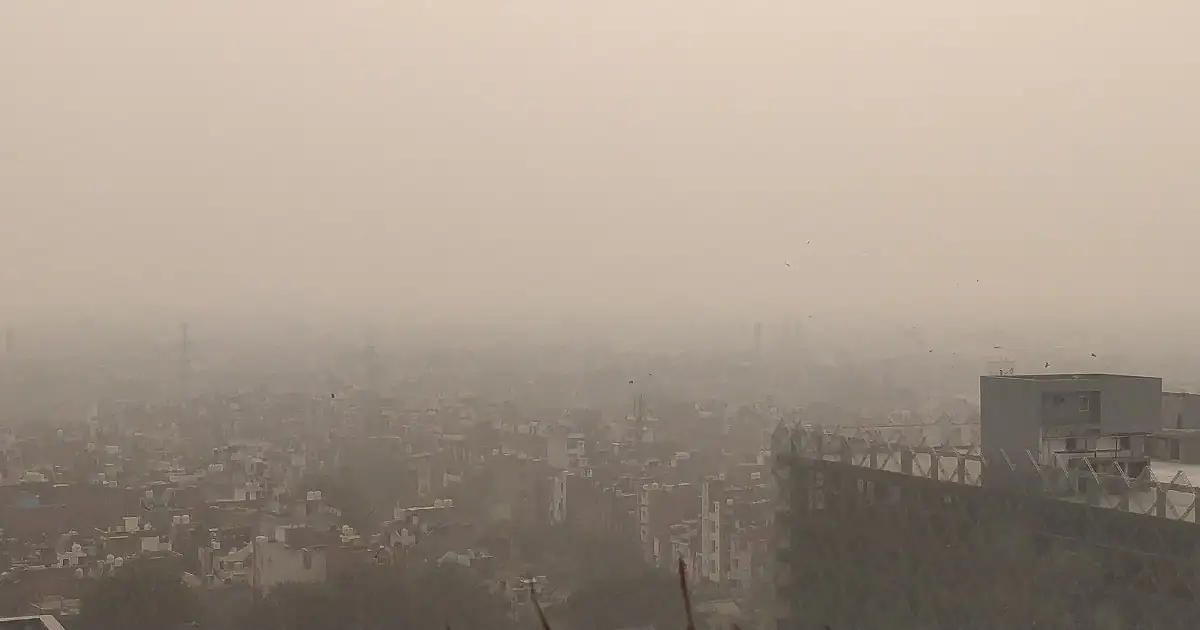
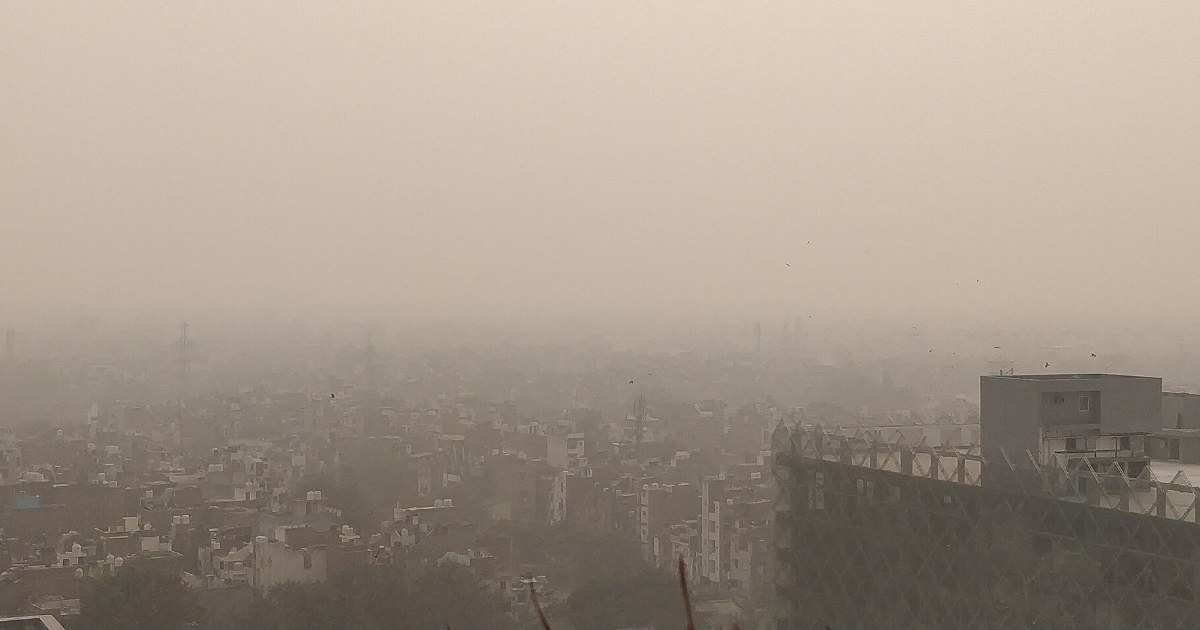
The Supreme Court has flagged a sharp rise in vehicle pollution in Delhi-NCR and asked Delhi and three neighbouring States for enforcement data. We explain the CAQM, the suo motu cases, the earlier orders and the hearings from 23 November. Read on!
1. What did the Supreme Court say about vehicle emissions in Delhi-NCR on 6 November?
On 6 November 2026, a Supreme Court Bench headed by Chief Justice Surya Kant looked past the usual post-Deepavali air-quality debate. It flagged a sharp increase in problems attributable to vehicular emissions in the capital region.
The Court said Delhi and the NCR bear the cumulative burden of vehicles originating within their boundaries and from neighbouring Uttar Pradesh, Haryana and Rajasthan. It also remarked that people, not the judiciary, must strike the decisive blow against air pollution.
In its order, the Court said the vehicular-emission issue "warrants urgent and immediate intervention". The amici curiae, lawyers assisting the Court, told the Bench that compliance with its earlier orders was "yet to be properly reported".
2. What is the Commission for Air Quality Management?
The Commission for Air Quality Management (CAQM) is the statutory body that can issue binding directions on air pollution across Delhi-NCR and adjoining areas. The 2021 law that created it also dissolved the earlier Environment Pollution (Prevention and Control) Authority, or EPCA.
Its strength lies in Section 12 of its Act. That section lets it give written directions to any person, officer or authority, and those directions apply notwithstanding any other law.
Penalties for non-compliance can reach five years in prison, a fine of Rs 1 crore, or both.
3. What must Delhi and the neighbouring States now report?
Six bodies must file responses: the Municipal Corporation of Delhi, the Delhi government, Delhi Police (Traffic), and the governments of Haryana, Rajasthan and Uttar Pradesh. The States and the NCT have two weeks to file their submissions.
The Court wants enforcement figures, not general statements of intent. Each response must show the steps taken to identify, monitor and regulate vehicles that fail emission standards, and the measures to stop overage, end-of-life or non-compliant vehicles from entering and operating.
The responses must also give the number of vehicles inspected, challaned and denied entry, explain how pollution-under-check (PUC) certification is enforced, and describe coordination between Delhi and its neighbours. A time-bound roadmap of short- and long-term measures is required.
4. What is the legal basis for these proceedings?
The present matter is Suo Motu Writ Petition (Civil) No. 11 of 2026. A suo motu case is one the Court starts on its own.
It was registered under directions in the Court's judgment of 12 March 2026 in M.C. Mehta v. Union of India, a petition pending since 1985.
The order states that the new suo motu cases "would not be the closure of the proceedings in the older Writ Petition". The decades-old M.C. Mehta matter is being reorganised into separate themes, not ended.
The Bench comprised Chief Justice Surya Kant, Justice Joymalya Bagchi and Justice V. Mohana. The CAQM Act was passed by the Lok Sabha on 4 August 2021 and the Rajya Sabha on 5 August 2021. Appeals against CAQM orders lie to the National Green Tribunal.
Note: The 6 November order does not cite any section of the CAQM Act. Press reports mention "four suo motu cases", but the order registers five: the lead case, No. 11, plus four themed cases, Nos. 12 to 15.
5. What had the Court already ordered this year?
The vehicle issue is not new to the proceedings. On 21 January 2026, the Court recorded CAQM-recommended measures: phasing out polluting vehicles from Delhi-NCR, strengthening the pollution-under-check regime, expanding rail and metro, and a revised electric-vehicle policy.
On 23 February 2026, it directed the Delhi government and three Union Ministries, Environment, Petroleum and Natural Gas, and Commerce and Industry, to submit a joint proposal for shifting coal-based industries out of Delhi-NCR.
This followed a CAQM recommendation to ban new coal-based thermal plants within 300 km of Delhi.
6. Should the Court be supervising pollution control at all?
The case for court supervision
Air pollution in the NCR crosses State borders, so no single government can fix it alone. A court hearing all six authorities together can compel each to put numbers on the record, and the amici's report of poor compliance suggests that pressure is still needed.
The argument on the other side
The Court itself said the decisive effort must come from people, not judges. Parliament already created CAQM with binding powers. Repeated judicial directions risk making the Court the de facto regulator, while the statutory body's own tools stay underused.
What an order cannot supply
A court can demand data on vehicles challaned or denied entry. It cannot itself run checkposts, fund public transport or replace an old fleet. Those depend on State budgets and inter-State coordination that have so far been reported only in part.
7. What happens next?
The Court listed the four themed suo motu cases for hearing from 23 to 30 November 2026:
Vehicular emissions and pollution: 23 November
Solid waste, crop-residue burning and firecrackers: 25 November
Construction, power plants and other industries: 26 November
Conservation and enhancement of green cover: 30 November
The vehicle hearing will test whether the States arrive with enforcement figures or general assurances.
Its real limit is structural: the Court can set deadlines and ask for numbers, but cleaner air depends on authorities acting between hearings, which the record so far does not show.