Can Karnataka raise SC/ST quotas beyond the 50% cap? What will the Supreme Court weigh?
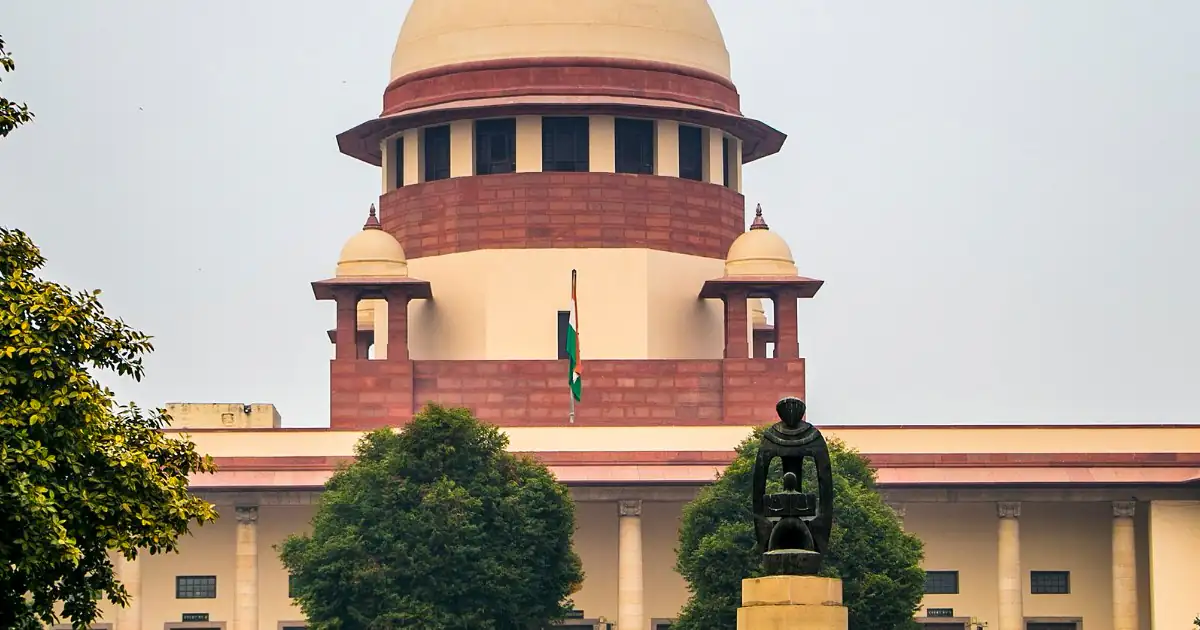
Karnataka has filed a Special Leave Petition in the Supreme Court after the High Court struck down its higher SC and ST quotas. The 50% ceiling from Indra Sawhney, the Ninth Schedule and the Coelho limits, explained step by step. Let us look at the full picture!
1. Why has Karnataka gone to the Supreme Court over its SC/ST quota hike?
The Karnataka government has filed a Special Leave Petition (SLP), an appeal that the Supreme Court may choose to hear, against a High Court order that quashed its increase in reservation for Scheduled Castes and Scheduled Tribes.
The State approved filing the SLP through a Government Order dated October 27. The High Court had quashed the higher quota on October 12, calling the enhancement constitutionally impermissible.
2. What exactly did the 2022 law change?
Karnataka's reservation matrix gave 15% to SCs, 3% to STs and 32% to Other Backward Classes, a total of exactly 50%. The 2022 law raised the SC share to 17% and the ST share to 7%.
The change came through the Karnataka Scheduled Castes and Scheduled Tribes (Reservation of Seats in Educational Institutions and of Appointments or Posts in the Services under the State) Act, 2022, following a commission headed by retired judge H.N. Nagamohan Das.
With the OBC share unchanged, total reservation rose to 56%. The High Court held the law ultra vires, meaning beyond constitutional limits, and struck down Sections 3 and 4 of the Act, which carried the higher percentages.
SC quota: 15% raised to 17%
ST quota: 3% raised to 7%
OBC quota: 32%, unchanged
Total reservation after the hike: 56%
High Court order: October 12, 2026; Sections 3 and 4 struck down
Government Order approving the SLP: October 27, 2026
Legislature resolution seeking Ninth Schedule cover: December 18, 2025
Indra Sawhney v. Union of India: November 16, 1992, nine judges
I.R. Coelho v. State of Tamil Nadu: (2007) 2 SCC 1, January 11, 2007, nine judges
3. Where does the 50% ceiling come from?
The ceiling was laid down in Indra Sawhney v. Union of India, decided on November 16, 1992, by a Special Bench of nine judges. The case arose from the Mandal Commission reservations for backward classes in central jobs.
Article 16(1) guarantees equality of opportunity in public employment, while Article 16(4) permits reservation for backward classes. The 50% limit is the Court's way of keeping the exception from overtaking the rule of equal opportunity.
That is why the High Court's reasoning was straightforward. A law taking the total to 56% crossed a line the Supreme Court had drawn, whatever the merits of the commission's findings on SC and ST backwardness.
4. What is the Ninth Schedule, and why does Karnataka want it?
Article 31B of the Constitution protects laws placed in the Ninth Schedule from being struck down for violating fundamental rights. Parliament adds a law to the Schedule through a constitutional amendment.
The Karnataka government wants the Centre to place the 2022 Act in the Ninth Schedule. A resolution urging this was moved in the State legislature on December 18, 2025, and the State says it will keep pressing the demand.
5. Would Ninth Schedule protection actually save the law?
Not automatically. In I.R. Coelho v. State of Tamil Nadu, a nine-judge bench held on January 11, 2007 that laws added to the Ninth Schedule after April 24, 1973 remain open to judicial review.
The test is the basic structure doctrine, the principle that Parliament cannot amend away the Constitution's essential features. Article 31B, the Court said, does not give a law unlimited immunity.
So even if the Centre agreed, a challenge would remain possible. The question would then be whether breaching the 50% ceiling damages equality as part of the basic structure.
6. What are the arguments on each side?
The State's argument
Karnataka argues that the SC and ST shares were fixed long ago and no longer reflect these communities' populations or backwardness. A commission studied the question, and the legislature acted on its findings.
On this view, the 50% figure is a judicial number, not a constitutional text, and the democratically elected legislature should be able to respond to fresh evidence of disadvantage.
The argument for holding the line
The other side says a ceiling only works if it binds. If each State can lift its quotas by statute and then seek Ninth Schedule cover, the 1992 limit becomes optional.
It also points to those outside the reserved categories, whose claim to equal opportunity under Article 16(1) shrinks with every point added above half.
7. What remains unresolved?
It is now for the Supreme Court to decide whether to admit the SLP and whether to pause the High Court's order in the meantime. Until it acts, that order stands.
The deeper question is one the courts have avoided answering directly: how rigid the 50% ceiling is when a State produces fresh data on disadvantage. Karnataka's case may force that question, but the Ninth Schedule route, after Coelho, can no longer settle it.