What is Amaravati Quantum Valley? Why does the IBM machine's arrival matter?
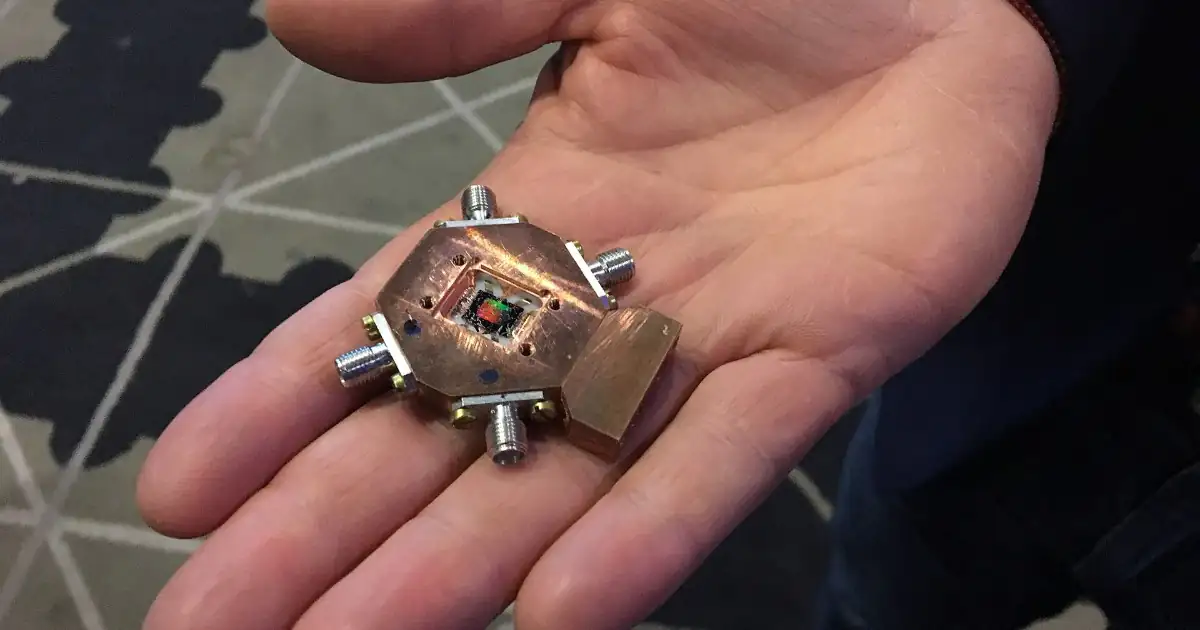
An IBM Quantum System will be installed at Amaravati Quantum Valley on 3 February 2027. We explain Andhra Pradesh's quantum policy, the local test beds and chips, how Amaravati fits with the National Quantum Mission, and the questions the State's bet must answer. Read on!
1. When will the IBM quantum computer be installed in Amaravati?
An IBM Quantum System will be installed at Amaravati Quantum Valley (AQV) on 3 February 2027. The machine is already on its way from the United States.
With it, Amaravati becomes the first city in South Asia to house a physical quantum computer. India also joins just seven other countries that host an IBM quantum machine.
2. What is Amaravati Quantum Valley?
Amaravati Quantum Valley is Andhra Pradesh's quantum technology hub. It rests on the Andhra Pradesh Quantum Policy, which makes AP the first Indian State with a dedicated quantum policy.
The policy is reinforced by the Amaravati Quantum Valley Declaration, ratified by the State Cabinet. Its stated aim is original research and homegrown intellectual property, rather than the IT-services model.
The A.P. State Quantum Mission runs the effort. Its Mission Director, C.V. Sridhar, has set the goal of making Amaravati one of the world's top five quantum hubs by 2030, with an outlay of up to Rs 3,000 crore over the next five years.
3. What has been built locally so far?
Two open-access reference test beds were built in seven months. Open access means they are available to users beyond the teams that built them.
Amaravati 1Q, at Medha Towers in Gannavaram, is meant for industry validation. Amaravati 1S, at SRM University, Amaravati, serves academic research.
The test beds work alongside Q SHIVA, short for Quantum System for Hardware Integration, Validation and Architecture. It is a locally engineered cryogenic platform built by Qbit Force and Srsti Quantum, led by L. Venkata Subramaniam.
4. What are NAADA and the cooling milestone?
NAADA is a superconducting resonator chip, etched from niobium on ultra-pure silicon. It is a core component for space detectors and quantum sensors.
Cryogenic means working at extremely low temperatures. The local platform has reached 4 Kelvin, a temperature measured on the scale that begins at absolute zero.
Engineers are now mapping the path to 10 millikelvin, which is four hundred times colder than 4 Kelvin. The milestone already reached and the target still ahead show how far the indigenous hardware has come and how far it must go.
5. Is the technology already in use?
A photonic Ising machine has been deployed in Guntur district to optimise emergency ambulance routing. It shows the hub's work moving from the lab into public services.
IBM Quantum System installation: 3 February 2027
Status: first physical quantum computer in a South Asian city
Countries hosting an IBM quantum machine: India plus seven others
Test beds: Amaravati 1Q (Gannavaram) and Amaravati 1S (SRM University, Amaravati)
Time taken to build test beds: seven months
Q SHIVA: cryogenic platform by Qbit Force and Srsti Quantum
NAADA: niobium superconducting resonator chip
Cooling reached: 4 Kelvin; target 10 millikelvin
Outlay: up to Rs 3,000 crore over five years
Goal: world's top five quantum hubs by 2030
Professionals reached through skilling: more than 1,04,000
Field use: photonic Ising machine for ambulance routing, Guntur
6. How does Amaravati fit with the National Quantum Mission?
The National Quantum Mission (NQM) has hubs at IIT Madras, IISc Bengaluru, IIT Bombay and IIT Delhi. They focus on foundational science.
Amaravati is designed to be the commercial engine. Its role is to turn quantum science into products, test beds and services that industry can use.
Skilling is part of that design. More than 1,04,000 professionals have been reached so far.
7. What are the two sides?
The case for the State's bet
AP has moved first, with a dedicated policy, a Cabinet-ratified declaration and a defined outlay. Hosting a physical IBM machine gives researchers and companies hands-on access that a cloud connection cannot.
The questions it must answer
The headline machine is imported. The State's own aim is homegrown intellectual property, and that depends on local platforms such as Q SHIVA and NAADA maturing, including the step from 4 Kelvin to 10 millikelvin.
The 2030 goal of a top-five global hub is a high bar, and the outlay is set at up to Rs 3,000 crore, not a fixed sum.
Hardware or services
The policy's real test is in its own words: research over IT services. A hosted machine can attract users, but only locally built hardware and intellectual property will show whether Amaravati has become a quantum hub or a well-equipped client of one.