What is virtual water trade? Why should India's rice exports move from volume to value?
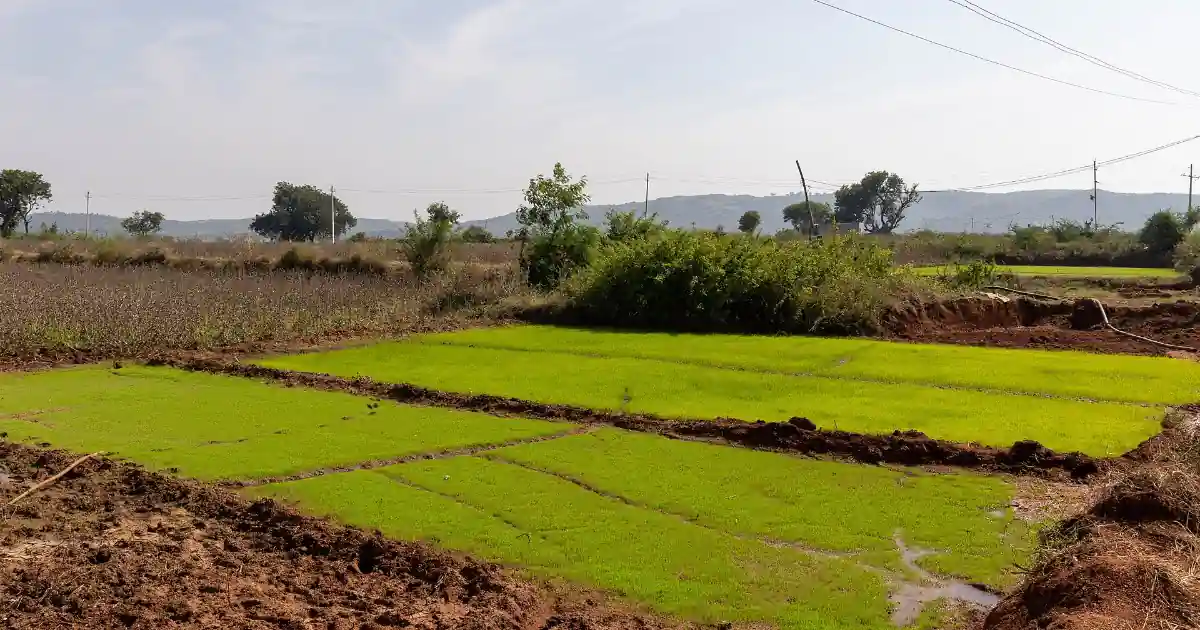
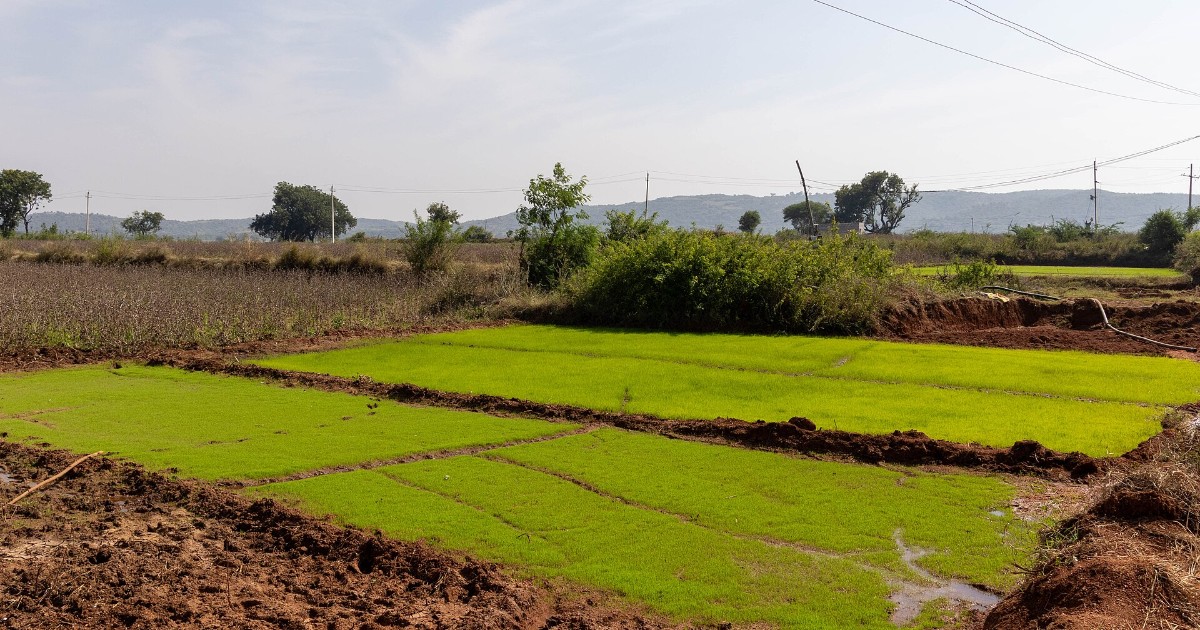
India is the world's largest rice exporter, and every tonne it ships carries the water used to grow it, a flow called virtual water trade. A new argument says India should earn more per tonne, not sell more tonnes. The numbers, the GI tools, and the trade-offs.
1. Why is India's rice export model being questioned?
India sells more rice abroad than any other country, but every tonne also ships out the water used to grow it. An argument published this week says India should earn more per tonne instead of exporting ever more tonnes.
The scale. India produced an estimated 154.02 million tonnes of rice in 2025-26. It has been the world's largest rice exporter since 2012, with about 30-35% of global rice exports in recent years.
The argument. The authors, A.V. Manjunatha and Vikram Patil, propose shifting exports from volume to value, while cutting the water, energy and carbon that each tonne costs.
Note: The volume-to-value prescription is the authors' argument, not government policy. The figures quoted in support of it are as printed.
2. What is virtual water trade?
The idea. Virtual water is the water used to produce a good. When a country exports rice, it also exports, in effect, the water that went into growing it. That flow is called virtual water trade.
Green water and blue water
Green water is rainfall stored in the soil. Rice raised on rain places little strain on local resources.
Blue water is water pumped from aquifers, rivers and reservoirs. Rice grown on blue water draws down a scarce and shrinking stock.
So the same tonne of rice can carry a very different cost, depending on where and how it was grown.
3. Where is the pressure most acute?
The region. The strain on blue water is most acute in Punjab, Haryana and western Uttar Pradesh, where rice relies on pumped water.
The carbon cost. Flooded rice fields also generate methane, a greenhouse gas. Three practices can cut those emissions:
alternate wetting and drying (AWD), letting fields dry between irrigations instead of keeping them flooded
direct-seeded rice (DSR), sowing seed straight into the field instead of transplanting seedlings
integrated nutrient management
A caution. The mitigation these methods deliver varies with agroclimatic and soil conditions. No single practice suits every region.
4. What do the export numbers show?
The overall trend. Rice exports rose from 17.73 million tonnes in 2020-21 to 21.57 million tonnes in 2025-26. Export value rose from $8.82 billion to $11.54 billion.
The split that makes the case. In 2025-26, non-Basmati exports were more than twice the volume of Basmati, yet earned only marginally more.
Rice production, 2025-26: 154.02 million tonnes (estimated)
Largest exporter since: 2012
Share of global rice exports: about 30-35%
Rice exports, 2020-21: 17.73 million tonnes, $8.82 billion
Rice exports, 2025-26: 21.57 million tonnes, $11.54 billion
Basmati exports, 2025-26: 6.52 million tonnes, $5.67 billion
Non-Basmati exports, 2025-26: 15.04 million tonnes, $5.86 billion
Basmati GI certificate: No. 238, dated 15 February 2016
GI law: Geographical Indications of Goods (Registration and Protection) Act, 1999
APEDA law: APEDA Act, 1985
5. What legal tools exist to sell rice on value?
Geographical indications. A geographical indication (GI) is a label that ties a product's quality and reputation to the place it comes from. India's GI law is the Geographical Indications of Goods (Registration and Protection) Act, 1999.
The exporter's body. The Agricultural and Processed Food Products Export Development Authority (APEDA) is set up under the APEDA Act, 1985.
Basmati's GI. APEDA is the registered proprietor of the Basmati GI. Certificate No. 238, dated 15 February 2016, covers Punjab, Haryana, Himachal Pradesh, Delhi, Uttarakhand, and parts of western Uttar Pradesh and Jammu and Kashmir.
6. What does "volume to value" mean in practice?
The authors' proposal has two halves.
On the farm. Incentivise crop diversification in the most water-stressed areas, so that less rice is grown where blue water is scarcest.
In the market. Strengthen export value through quality, branding, traceability, processing and geographical indications, rather than through larger volumes.
The yardstick. They suggest tracking exports through a water-carbon-value framework, so that each tonne is judged by what it earns against the water and carbon it uses.
7. What are the two sides?
The case for the shift
Basmati earned almost as much as non-Basmati from less than half the volume. If value can be raised through branding and GIs, India can earn the same while shipping less of its groundwater abroad.
The case for caution
Non-Basmati still brought in more export earnings than Basmati in 2025-26. Volume exports are not a failure, and diversification away from rice asks farmers in Punjab and Haryana to change what has worked for them.
What the export price leaves out
The price a buyer pays for a tonne of rice does not include the blue water drawn to grow it. Until that cost shows up somewhere in policy, a volume-to-value shift will depend on persuasion, not on prices.