What is the National FRA Digital Platform, and how does a forest rights claim move?
The Ministry of Tribal Affairs has put Forest Rights Act claims on one digital system, from the Gram Sabha, the village assembly, to a digitally signed title. Here is how a claim moves through three tiers, and where the final say still lies.
1. What is the National FRA Digital Platform, and why does it matter now?
A forest dweller's claim to land no longer has to move through separate files at each office. The Ministry of Tribal Affairs has launched the National FRA Digital Platform, which brings the whole claims process onto one system.
The span. The platform runs from a claim's submission at the Gram Sabha to the issue of a digitally signed title. A title is the legal document that records a recognised forest right.
The timing. The launch came during Janjatiya Gaurav Pakhwada, a fortnight marking tribal pride, held from 1 to 15 November 2026.
2. What does the Forest Rights Act, 2006 recognise?
The Scheduled Tribes and Other Traditional Forest Dwellers (Recognition of Forest Rights) Act, 2006 turns on one word: recognition. It records forest rights held individually and held as communities.
Land to live on and farm
Section 3(1)(a) recognises the right to hold and live in forest land, under individual or common occupation, for habitation or self-cultivation. Habitation means a home; self-cultivation means farming the land oneself.
The community's own forest
Section 3(1)(i) recognises the right to protect, regenerate, conserve or manage any community forest resource. It turns a village from a user of the forest into its manager.
Who can claim
Forest dwelling Scheduled Tribes are defined in Section 2(c). Other traditional forest dwellers, in Section 2(o), must show residence going back at least three generations before 13 December 2005.
What a generation means. The Act fixes one generation at 25 years, so three generations means at least 75 years before the cut-off date.
3. How does a claim move from the Gram Sabha to the District Level Committee?
Section 6 sets out three tiers. Each has a separate job, and an aggrieved person gets two chances to object before the last tier rules.
Tier one: the Gram Sabha
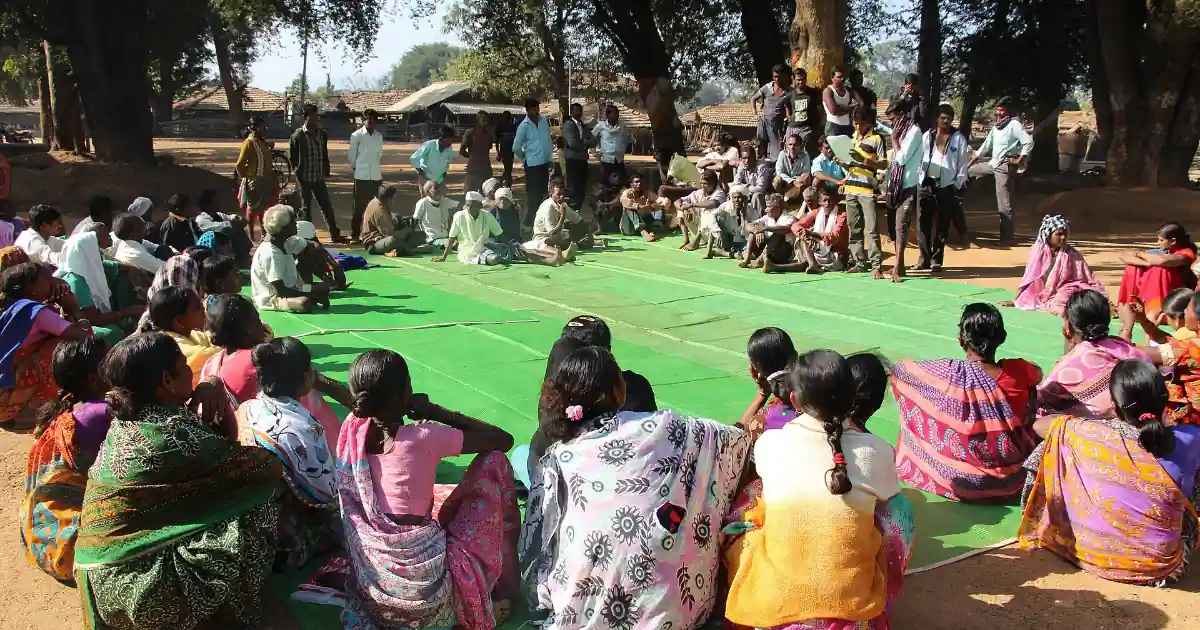
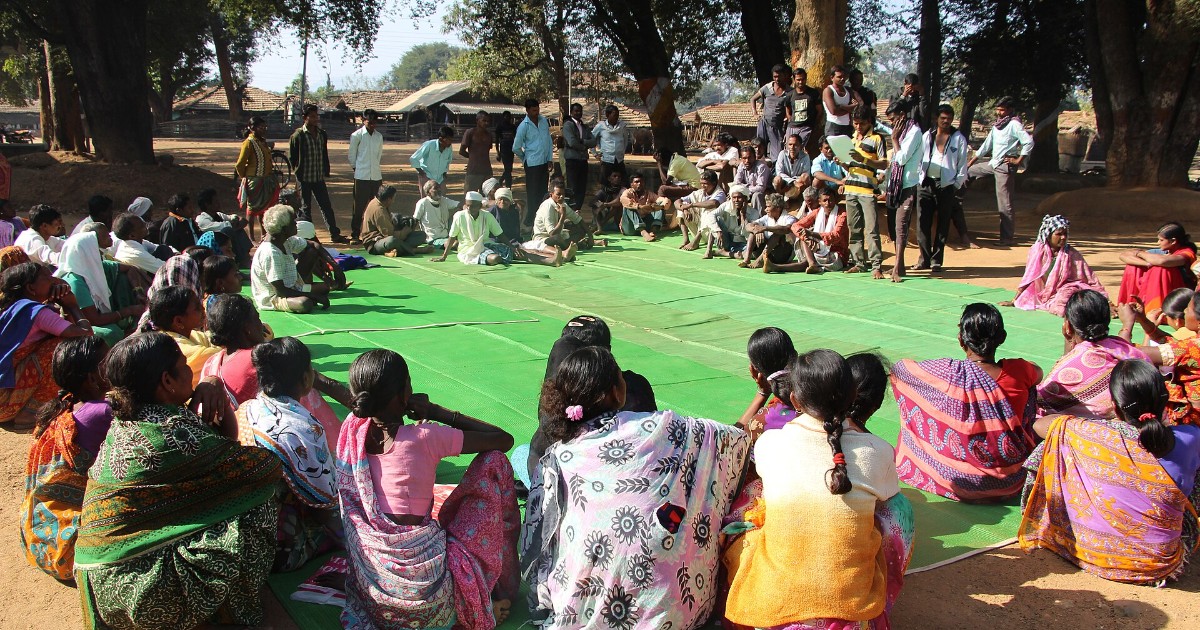
The Gram Sabha is the assembly of all adult members of a village. Under Section 6(1), it is the authority that starts the process.
What it does. It receives claims and verifies them, then maps the land and passes a resolution. Anyone aggrieved by that resolution can petition against it within 60 days, under Section 6(2).
Tier two: the Sub-Divisional Level Committee
The Sub-Divisional Level Committee, or SDLC, examines the resolution under Section 6(3). It prepares the record of forest rights, the formal account of who holds which right over which land.
A person aggrieved by the SDLC's decision can petition the District Level Committee within 60 days, under Section 6(4).
Tier three: the District Level Committee
The District Level Committee, or DLC, considers the record and gives the final approval under Section 6(5). Section 6(6) makes its decision final and binding.
4. What is the legal basis for vesting these rights?
Section 4(1) is where the Central Government recognises and vests forest rights. To vest a right is to place it legally in the holder's name.
Who watches the process. Section 6(7) provides for a State Level Monitoring Committee. It is chaired by the Chief Secretary, the senior-most civil servant of the state.
Act number: No. 2 of 2007
Commencement: 31 December 2007
Rules: 2008; Rule 5 (SDLC), Rule 7 (DLC), Rule 10 (SLMC)
Nodal ministry: Ministry of Tribal Affairs
Cut-off date for other traditional forest dwellers: 13 December 2005
One generation: 25 years
Gram Sabha as initiating authority: Section 6(1)
Petition windows: 60 days, Sections 6(2) and 6(4)
DLC decision final and binding: Section 6(6)
Janjatiya Gaurav Pakhwada: 1 to 15 November 2026
Note:
5. What does one digital system change?
The case for the platform
One record. A claim passes through three bodies at three levels. With every stage on one system, a claim filed at the Gram Sabha can be followed to the DLC's decision on the same record.
A signed title. Proof of a recognised right then rests on a document the system issues, rather than on a paper copy kept in one office.
The argument for caution
The Act puts the start of every claim with the Gram Sabha, a body of villagers, not officials. A digital chain is only as good as its first entry: the village's verification, map and resolution.
The power software does not touch
No platform rewrites Section 6. The SDLC still examines and prepares the record. The DLC still decides, and its decision stays final and binding.
6. What can the platform not do?
The Act's design has not changed since 2007. Rights begin with the Gram Sabha and end with the District Level Committee. The platform changes the route a claim travels, not the rule that decides it.
The system can show where a claim stands and which committee holds it next. Whether the claim succeeds still turns on the village resolution, the SDLC's record and the DLC's judgment. A faster file is not a recognised right.