Why did the Supreme Court warn of contempt over Aadhaar face authentication?
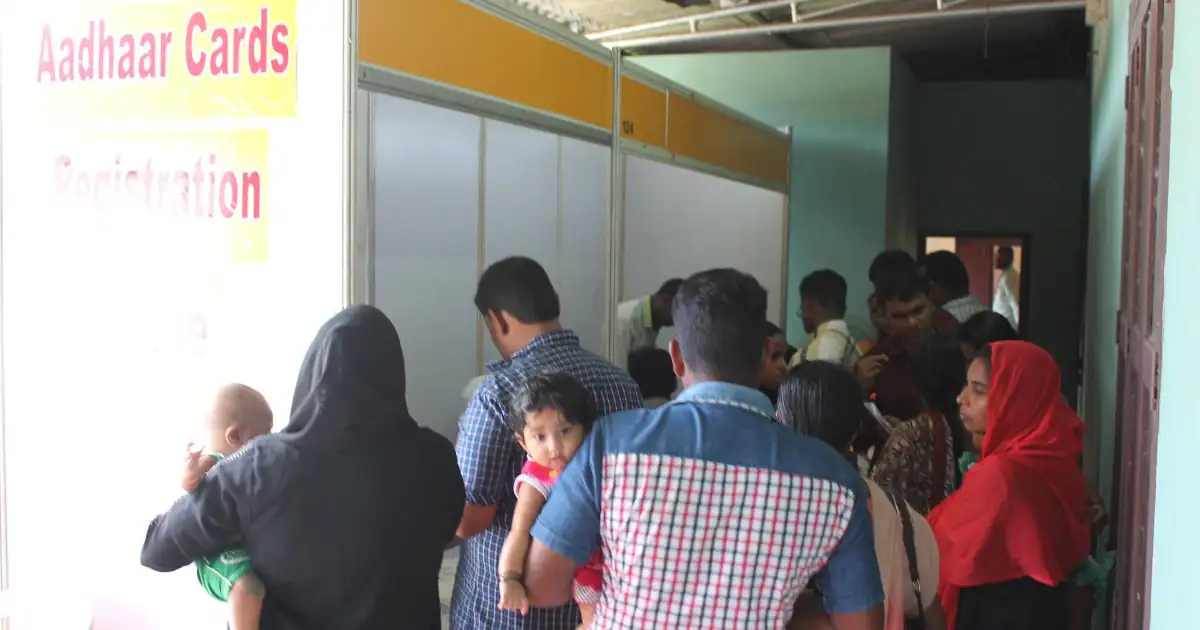
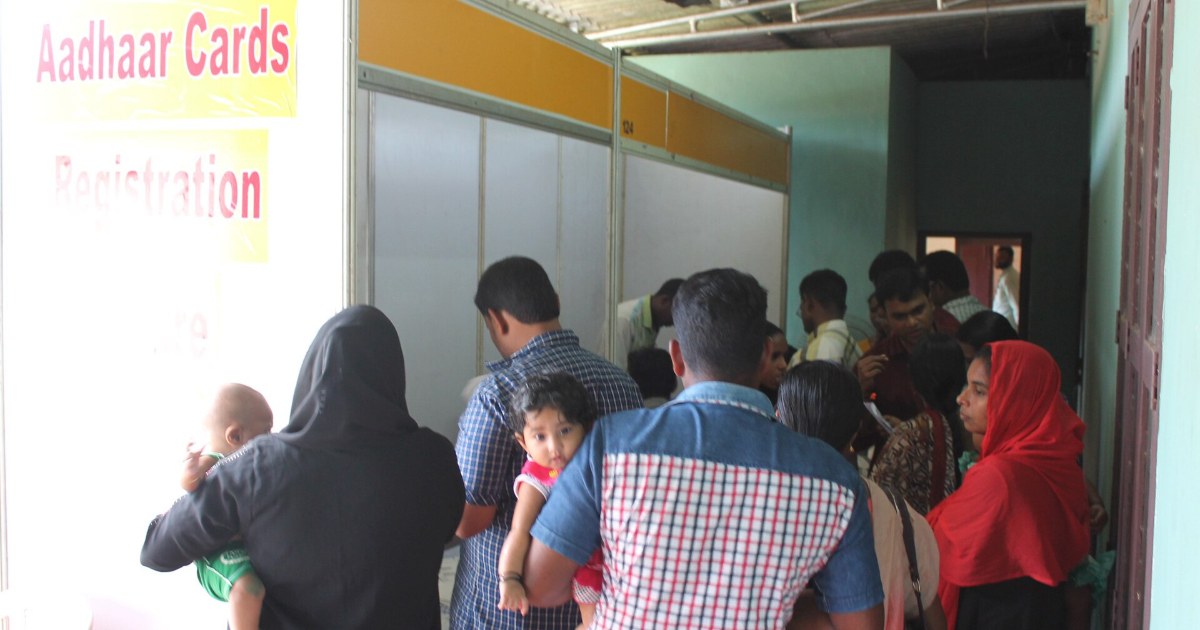
The Supreme Court has warned of contempt if the Centre does not explain why blind and low-vision persons still cannot complete Aadhaar face authentication. Read what the 2025 Pragya Prasun judgment ordered, its Article 21 basis, and the case for accessible e-KYC, verification that everyone can complete.
1. Why did the Supreme Court warn of contempt over Aadhaar face authentication?
A right on paper, a barrier in practice. Many blind and low-vision persons still cannot complete a basic digital step: proving who they are to a bank or app. The Supreme Court has now warned the Centre that ignoring this could invite contempt.
The application. Advocate Amar Jain, a party in the original case, told the court that many visually challenged and low-vision persons cannot independently complete Aadhaar face authentication. Where e-KYC relies only on this method, they are locked out.
The court's response. A Bench headed by Justice J.B. Pardiwala issued notice and warned of contempt action if the Union government and other authorities did not file a detailed response. The matter will be heard again in four weeks.
The demand. The authorities were asked to fully implement the court's 2025 judgment in Pragya Prasun v Union of India, which had already ordered accessible e-KYC.
2. What is face authentication, and why does it shut out blind users?
How it works. Face authentication confirms identity by matching a live image of a person's face with the photograph held against their Aadhaar number. A liveness check, a test that a real person is present, is part of the process.
Where it fails. According to the application, the new Aadhaar app's interface needs the user's eyes to be attentive and looking into the frame. A person who cannot see the screen, or whose eyes cannot fix on the camera, cannot meet that condition alone.
The real-world cost. The applicant said there is no grievance mechanism for accessibility complaints. He also cited an e-KYC rejection by a private bank for a credit card in October 2026, well over a year after the judgment.
3. What did the Pragya Prasun judgment of 2025 order?
The 2025 case. In Pragya Prasun v Union of India, the Supreme Court dealt with persons with disabilities who could not complete digital KYC, the know-your-customer check that banks and service providers run. It issued a set of binding directions.
Citation: 2025 INSC 599
Bench: Justices J.B. Pardiwala and R. Mahadevan
Nodal officer: one for digital accessibility in each department
Audits: periodic accessibility audits by certified professionals, with persons with blindness in user testing
RBI: allow alternatives to the "blinking of eyes" liveness check; clarify that video KYC (V-CIP) can be used
Paper KYC: to remain available as an accessible alternative
Other formats: sign language, captions, audio description, Braille and voice-enabled services
Bodies now asked to respond: Union government, RBI, MeitY, TRAI, Department of Telecommunications, SEBI, PFRDA and IRDAI
Note: Remember the judgment by its citation, 2025 INSC 599, and by its Article 21 reading.
4. What is the constitutional basis for digital accessibility?
Article 21 widened. The court read access to digital services for persons with disabilities into the right to life under Article 21. It read this with Article 14 (equality), Article 15 (non-discrimination) and Article 38, a Directive Principle on securing a just social order.
The statute. The Rights of Persons with Disabilities Act, 2016 gives these rights a statutory footing. The court also drew on the UN Convention on the Rights of Persons with Disabilities (UNCRPD), to which India is a party.
The principle. The court spoke of ensuring that digital infrastructure and services are accessible to all, including persons with disabilities and other marginalised groups. When services move online, an inaccessible gateway becomes a denial of the service itself.
5. What else is the court examining?
A second application. The court also sought a response on a separate challenge to a Petroleum Ministry mandate, announced in a September press release. It makes biometric Aadhaar authentication compulsory for subsidised domestic LPG refills from 1 October 2026.
The common thread. Both applications raise the same question. When a welfare benefit or a financial service depends on a single biometric method, what happens to those who cannot complete it?
6. What are the two sides?
The case for biometric checks
Fraud control. Biometric and face authentication help confirm that the right person receives a subsidy or opens an account. They reduce impersonation and duplicate claims, which is why regulators and ministries rely on them.
The case for accessible alternatives
No single gate. The 2025 judgment already treats alternatives, such as OTP-based e-KYC, video KYC and paper KYC, as part of the right. A system that offers only face authentication fails the people it was ordered to include.
What a court order cannot do alone
Compliance is the gap. The directions exist, but implementation across eight bodies does not follow automatically. A contempt warning can force a response; accessible design still has to be built into each app and audited. Until then, the right depends on which counter one reaches.