What did the Supreme Court order for freed bonded labourers? Why do deadlines matter?

The Supreme Court has made a revised SOP, a step-by-step rulebook for officials, binding nationwide for freed bonded labourers, with release certificates in 24 hours and aid in 7 days. Read the case, Article 23 and the 1976 Act, and whether deadlines can end delays.
1. What did the Supreme Court order for freed bonded labourers?
Freedom without a living. A labourer freed from bondage often walks out with nothing. If promised help takes years, the risk of falling back into debt rises. The Supreme Court has now set nationwide deadlines to close that gap.
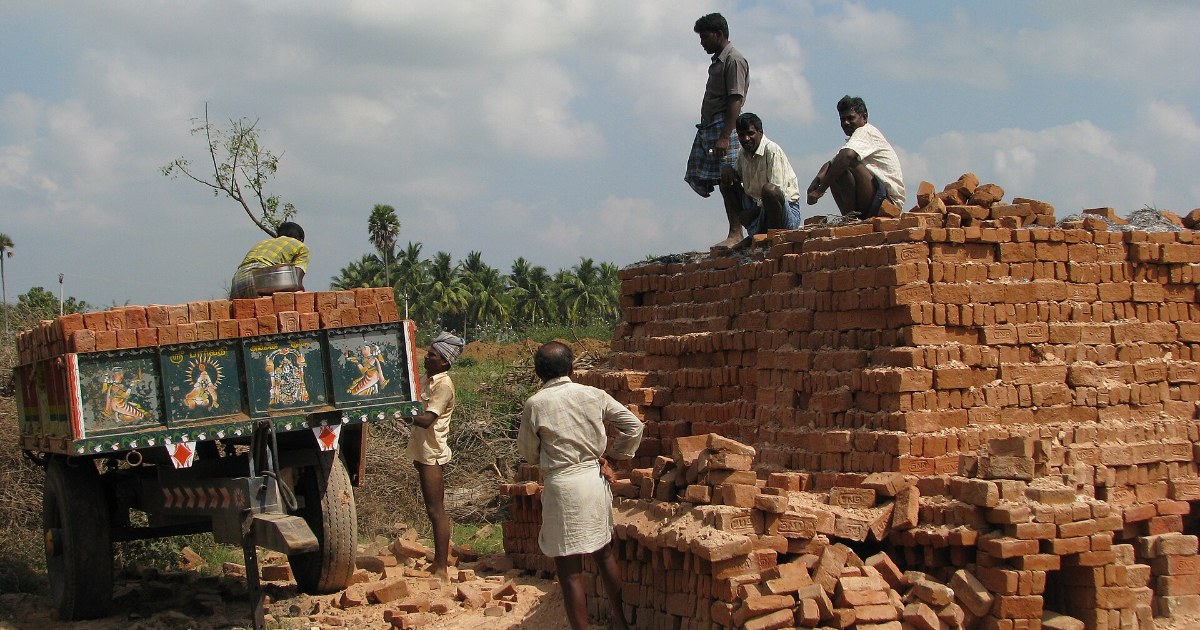
The case behind it. The petitioners were rescued from a brick kiln in Shahjahanpur, Uttar Pradesh, on 28 February 2019. Of 42 labourers given release certificates, 25 received Rs 20,000 in immediate assistance. Seventeen were still waiting.
The ruling. On 2 November 2026, a Bench of Justices Vikram Nath and Aparesh Kumar Singh made a revised standard operating procedure (SOP), a step-by-step rulebook for officials, binding across all States and Union Territories.
The guiding line. The court observed that "rehabilitation delayed may, in substance, amount to rehabilitation denied."
2. What is bonded labour?
A debt that binds. Bonded labour is a system in which a person works to repay a debt, often on terms that make repayment impossible. The worker cannot leave, change employers or bargain over wages until the debt is cleared.
Why rescue is only half the job. A freed worker who has no income, papers or support is vulnerable to the same lenders again. That is why the law pairs release with rehabilitation, meaning money, livelihood and follow-up.
3. What is the legal and constitutional basis?
The Constitution. Article 23 prohibits forced labour and traffic in human beings. Article 24 bars children from hazardous employment, and Article 21 guarantees the right to life with dignity. The petition came under Article 32.
The 1976 Act. The Bonded Labour System (Abolition) Act, 1976 abolishes the system and frees every bonded labourer (Section 4). Section 5 voids any agreement or custom for bonded labour, and Section 6 extinguishes the bonded debt.
Duties under the Act. Sections 10 to 12 place duties on State Governments and District Magistrates. Sections 13 and 14 set up Vigilance Committees to identify and help bonded labourers.
Precedent. The court built on Bandhua Mukti Morcha v Union of India (1984) and Neeraja Chaudhary v State of Madhya Pradesh (1984), landmark rulings that treated release and rehabilitation of bonded labourers as a duty of the State.
4. What timelines has the court fixed?
A common clock. The directions convert the SOP's steps into deadlines that apply in every State.
Case: Surendra Manjhi v Union of India, 2026 INSC 1185
Verifying complaints: ordinarily within 24 hours
Release certificate: ordinarily within 24 hours of bondage being determined
Immediate financial assistance: ordinarily within 7 days of the release certificate
Individual rehabilitation plan: within 90 days of rescue
Revised SOP: dated 14 May 2026; States and UTs to comply within 6 months
Grievances: ordinarily resolved within 30 days
Note: Most deadlines are framed as "ordinarily". They set the expected norm, not an absolute limit in every case.
Uniform paperwork. The Union must prescribe one format for release certificates that every State and UT recognises. Assistance also cannot be withheld only because criminal proceedings are pending, if the scheme's conditions are met.
5. How will the system be monitored?
Officers and committees. Each State and UT must name a nodal officer and set up an inter-State coordination mechanism within six months. Vigilance Committees must function at district and sub-divisional levels.
Tracking. The NAVJIVAN portal is to be operated, State Monitoring Committees must review cases monthly, and District Vigilance Committees must follow each person's rehabilitation for at least a year after release.
Central tasks. Within three months, the Union must issue supplementary guidelines with the National Human Rights Commission (NHRC) and decide on revising the Central Sector Rehabilitation Scheme. Its compliance affidavit is due within four months.
The 17 labourers. Uttar Pradesh and Bihar must jointly verify the unpaid labourers within a month and pay them, preferably within three months and in any event within six.
6. Will deadlines be enough?
Why the deadlines help
Speed is the remedy. Before this ruling, a freed labourer depended on how fast each district moved. Fixed timelines, one certificate format and monthly reviews put every case on the same clock.
Why deadlines alone may fall short
Capacity is local. Deadlines bind officers who must first identify bondage, which is often hidden. The Shahjahanpur labourers waited years even though the Act and a rehabilitation scheme already existed.
The test ahead
From order to practice. The petitions will be listed again after seven months to check compliance. The ruling can set the clock, but it cannot find hidden bondage. That depends on working vigilance committees and officials willing to recognise debt bondage.