What was the Berlin Conference? How did its General Act open Africa to partition?
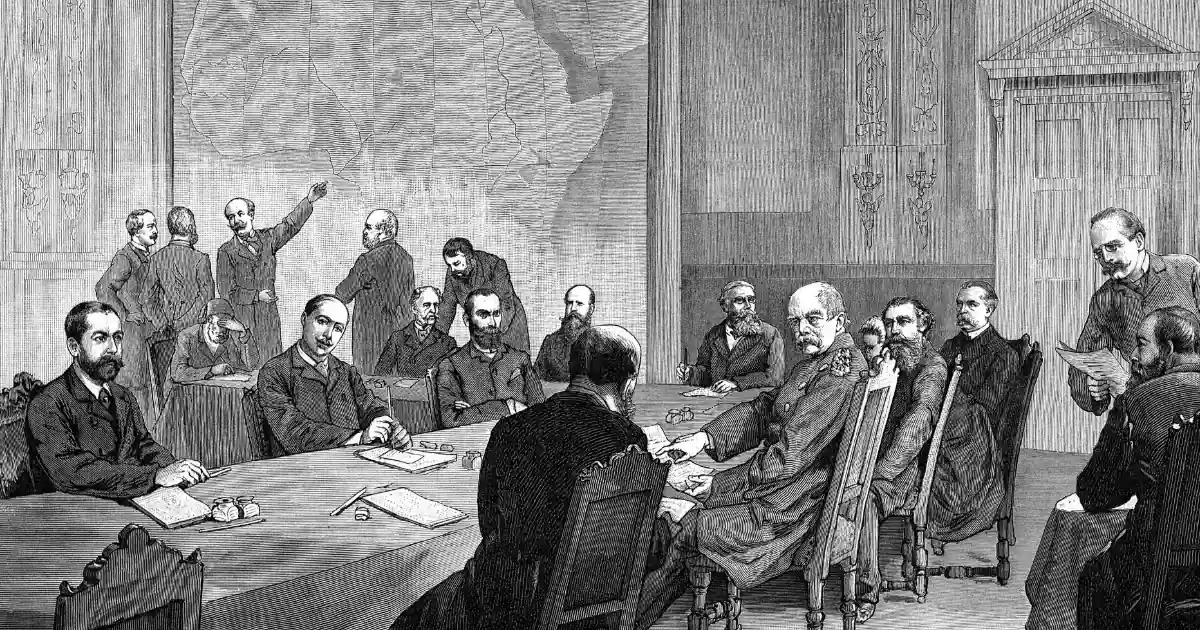
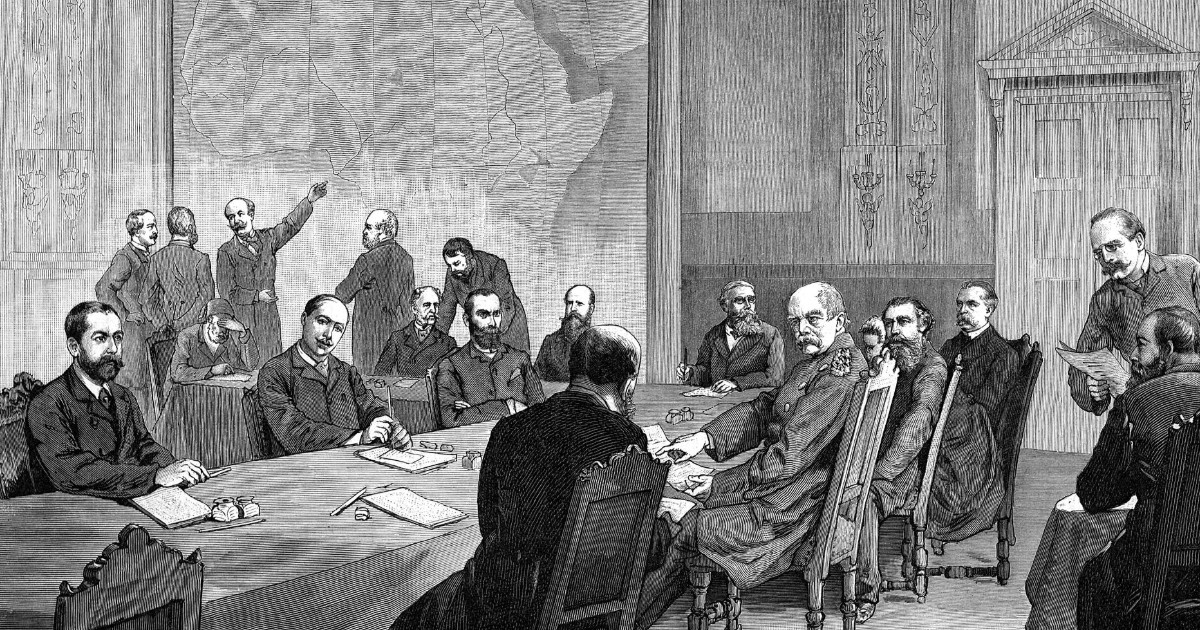
The Berlin Conference opened on 15 November 1884 and ended with the General Act, which set the rule of effective occupation, meaning real control on the ground before a claim counts. Read what the Act said, what it left out and why no African was in the room.
1. Why is the Berlin Conference remembered this November?
A meeting about a continent. On 15 November 1884, fourteen states met in Berlin to agree on rules for claiming Africa. No African was in the room. This November marked 142 years since the conference opened.
Why it still matters. The meeting did not draw Africa's borders, but it set the terms under which European powers raced to draw them. By 1913, nearly all of Africa was under colonial rule, except Ethiopia and Liberia.
2. What was the Berlin Conference?
Bismarck as host. German Chancellor Otto von Bismarck convened the conference in Berlin. It ran from 15 November 1884 to 26 February 1885 and closed with a treaty called the General Act.
Who pushed for it. Portugal took the initiative, with British support, and Bismarck organised the meeting at the request of King Leopold II of Belgium. The 14 participating states were:
The German Reich, as host
Britain, France, Portugal, Spain and Italy
Belgium, the Netherlands, Denmark and Sweden-Norway
Austria-Hungary, Russia and the Ottoman Empire
The United States
3. Why did Europe need rules for Africa?
Rival claims. By the early 1880s, European powers were pressing competing claims on African coasts and rivers, especially around the Congo basin. Without common rules, each new claim could become a quarrel between the powers themselves.
Trade before territory. Much of what the conference agreed concerned commerce rather than land. The powers wanted access to the great rivers and markets of West and Central Africa on equal terms.
Process, not partition. The conference was not a map-drawing exercise. It settled how a claim should be made and recognised, and left the actual carving up to the years that followed.
4. What did the General Act say?
Four commercial rules. The General Act laid down rules in four areas:
Free trade and shipping in the Congo basin
Freedom of navigation on the Congo and Niger rivers
Neutrality of the Congo basin in time of war
A ban on slave trading in the basin
Notice to rivals. The rule that mattered most came at the end. Article 34 required a power taking new possessions or a protectorate on the African coast to notify the other signatories, so they could raise claims of their own.
Effective occupation. Article 35 obliged signatories to establish authority in the coastal regions they occupied, enough to protect existing rights and freedom of trade. This became the principle of effective occupation, meaning control on the ground, not a flag on a map.
Note: Both articles speak of the coasts of the African continent. The Act did not fully extend effective occupation to the interior, and the term hinterland was never legally defined, which left inland claims open to dispute.
5. What happened to the Congo?
Not in the Act. The General Act did not name or create the Congo Free State. A separate agreement recognised the Congo territory as the private property of King Leopold II of Belgium.
The name came later. The name Congo Free State was announced on 1 August 1885, months after the conference closed. A vast territory thus became one monarch's personal holding rather than a colony of the Belgian state.
Conference opened: 15 November 1884, Berlin
General Act signed: 26 February 1885
Convened by: Otto von Bismarck
Participants: 14 states, with no African representative
Effective occupation: Articles 34 and 35 of the General Act
Rivers opened to free navigation: Congo and Niger
Congo Free State named: 1 August 1885
Not colonised by 1913: Ethiopia and Liberia
Note: Two common exam traps: the Berlin Conference did not draw Africa's borders, and its General Act did not create the Congo Free State.
6. How should the conference be judged?
The view from the European capitals
Order among rivals. For the powers, the Act replaced loose claims with an agreed procedure: notify, then occupy. It kept the major rivers open to every trader and aimed to stop rivalry in Africa from turning into war in Europe.
The view from Africa
Excluded from their own future. No African ruler was invited or consulted. Rules about African land, rivers and trade were written entirely by outsiders, and effective occupation turned colonisation into a race to establish control on the ground.
Borders without consent. Although the Act drew no lines, the partition it enabled is widely blamed for frontiers that ignored the people living across them, a legacy African states inherited at independence.
What the Act left open
The interior question. Because effective occupation was written for the coasts, inland claims rested on weaker footing. The undefined hinterland invited the very disputes the Act was meant to prevent.
7. What does the Berlin Conference teach about colonialism?
Law as an instrument. The General Act shows that colonialism advanced through treaties and procedure as well as through force. Claims became legal once the right notices were sent and the right authority was set up.
What law could not supply. What the Act could never provide was consent. Its rules bound the powers to one another, not to the people they governed, and that gap between legal title and legitimacy is the thread that runs to twentieth-century decolonisation.