What does the 2026 transgender law amendment change? Why is self-identification at stake?

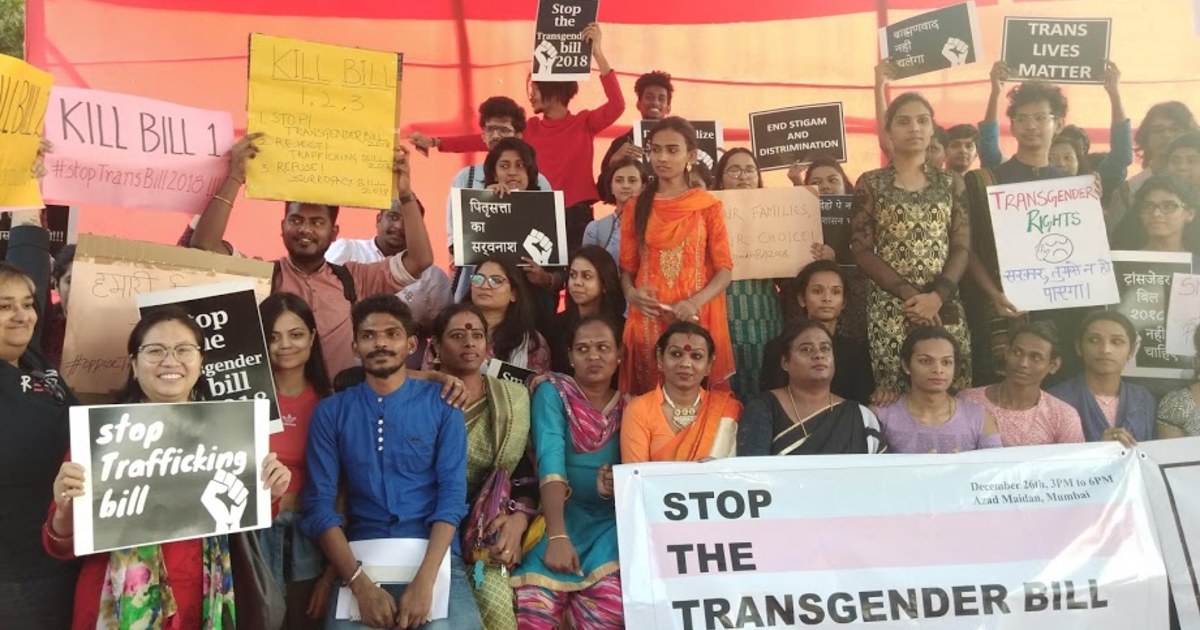
The Transgender Persons (Protection of Rights) Amendment Act, 2026 replaces self-identification with medical-board and District Magistrate certification. We explain the NALSA ruling, the 2019 Act, the new definition and the debate. Read on!
1. What does the Transgender Persons (Protection of Rights) Amendment Act, 2026 change?
Parliament passed the Transgender Persons (Protection of Rights) Amendment Act, 2026 earlier this year. It removes the principle of self-identification, the idea that a person's own declaration of gender is enough for legal recognition.
In its place, a person must obtain a medical board's recommendation, select from a set of prescribed categories, and then be certified by the District Magistrate. The amendment also narrows who counts as "transgender" in law.
Note: This post describes the 2026 amendment's provisions as they have been publicly reported; the amending Act's section numbers are not cited.
2. What did NALSA v. Union of India (2014) hold?
The starting point is National Legal Services Authority v. Union of India, decided on 15 April 2014 by Justices K.S. Radhakrishnan and A.K. Sikri. Justice Radhakrishnan authored the judgment, reported as (2014) 5 SCC 438.
The Court held that hijras and eunuchs must be treated as a "third gender". It upheld the right of transgender persons to decide their self-identified gender, and directed the Centre and States to grant legal recognition as male, female or third gender.
The judgment is widely read as treating gender identity as part of personal autonomy and dignity under Article 21, and as rejecting any requirement of medical intervention for recognition. That reading is at the centre of today's debate.
3. What did the Transgender Persons (Protection of Rights) Act, 2019 provide?
Parliament first legislated in 2019. The Act built a certificate system around the District Magistrate while keeping self-perceived identity at its core. Its key provisions:
Act number: Act No. 40 of 2019, dated 5 December 2019
Definition, s.2(k): a person whose gender does not match the gender assigned at birth
Who was included: trans men and trans women, intersex persons, genderqueer persons, and socio-cultural identities such as kinner, hijra, aravani and jogta
Medical treatment: not required; trans men and trans women were covered with or without it
Self-perceived identity, s.4(2): a person recognised as transgender "shall have a right to self-perceived gender identity"
Certificate, s.5: application for a certificate of identity to the District Magistrate
Effect, s.6: the DM issues the certificate, and gender in official documents follows it
The District Magistrate was therefore already part of the process in 2019. What the 2026 amendment adds is the medical board, and a much narrower list of people who qualify at all.
4. Who counts as transgender under the amended definition?
The amended definition removes trans men, trans women and genderqueer persons from the statutory definition. In their place is a restricted set of categories.
The first is certain socio-cultural identities: kinner, hijra, aravani, jogta and eunuch. The second is persons with specified variations in sex characteristics. Medical certification is mandated even for the socio-cultural categories.
The change is therefore twofold. Fewer people fall within the definition, and those who do must now pass a medical step before the District Magistrate can certify them.
5. Why is self-identification at stake?
The logic of certification
A certification model gives the State a documented record before a person's legal gender is changed. A medical board's recommendation and a District Magistrate's certificate together create an official trail that other agencies can rely on.
The objection
A group of authors writing in The Hindu argue that the amendment conflicts with the reasoning of NALSA, which they read as having rejected making gender identity dependent on medical intervention.
They also argue that the Act does not provide an effective appeal mechanism or independent review. On their reading, a person whom a medical board declines to recommend has no effective route to challenge that finding.
The NHRC's advisory
The National Human Rights Commission's 2026 advisory identifies continuing concerns for transgender persons in education, healthcare, documentation and grievance redressal. The same authors say the Act goes against its recommendations on self-identification.
6. What remains unresolved?
The core question is constitutional. NALSA upheld a right to self-identified gender; Parliament has now made recognition depend on medical certification. Whether a statute can narrow a right the Supreme Court recognised is a question only a fresh challenge can settle.
The amendment also leaves people outside the new categories uncertain. Trans men, trans women and genderqueer persons were named in the 2019 definition. Under the 2026 text, their statutory route to recognition is no longer spelt out.