What is a Special Intensive Revision? What changes in Andhra Pradesh's new schedule?
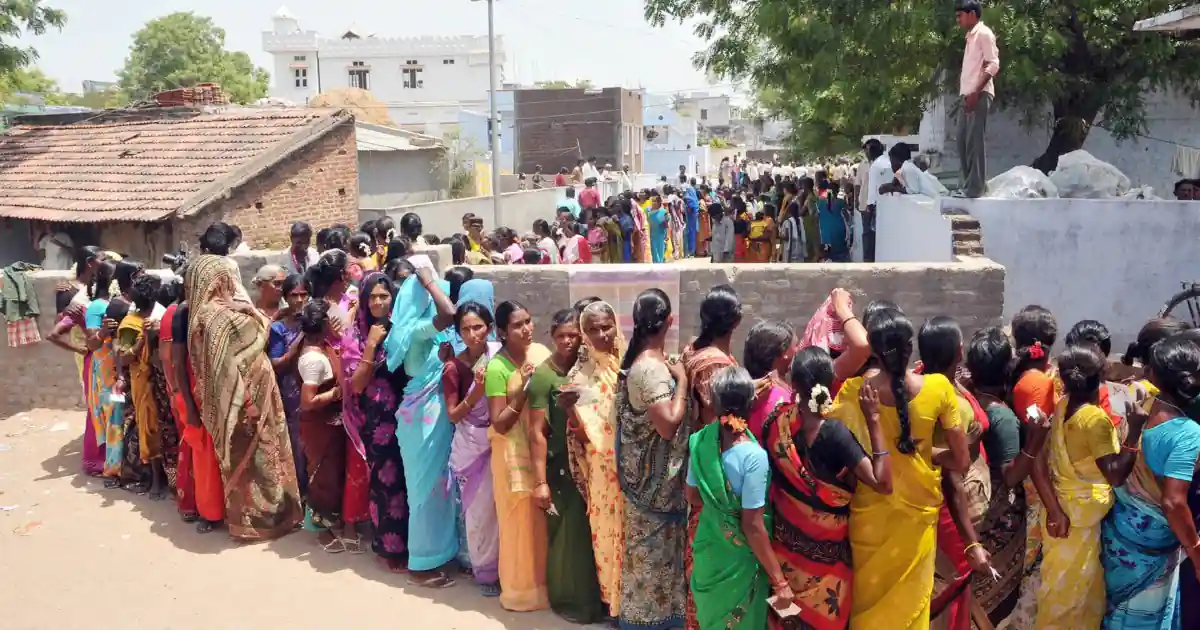
The Election Commission has extended Andhra Pradesh's Special Intensive Revision of electoral rolls: claims and objections now run to 15 December, and the final roll comes on 22 December. We explain SIR and its legal basis. Read on!
1. What changes in Andhra Pradesh's new SIR schedule?
On 17 November, the Election Commission of India issued an order extending the schedule of the Special Intensive Revision (SIR) of electoral rolls in Andhra Pradesh. Both the window for claims and the date of the final roll have moved.
Order issued: 17 November, by the Election Commission of India
Claims and objections: earlier till 20 November, now till 15 December
Final electoral roll: earlier due on 30 November, now on 22 December
Legal basis: Section 21 of the Representation of the People Act, 1950
The extension adds 25 days to the window for claims and objections, and pushes the final roll back by 22 days. Every later stage of the revision moves with it.
2. What is a Special Intensive Revision?
An electoral roll is the list of people entitled to vote in a constituency. It is revised so that eligible people are added, details are corrected and entries that should not be there are removed.
A special revision is one the Election Commission directs outside the routine cycle. The word "intensive" signals a closer re-examination of the roll than an ordinary update, which is why the exercise takes longer.
For a voter, the practical point is simple. During an SIR, it is worth checking that one's own entry is present and correct, because the claims window is the time to fix it.
3. What is the legal basis for the SIR?
The power comes from Section 21 of the Representation of the People Act, 1950 (Act 43 of 1950), the law that governs the preparation and revision of electoral rolls.
Section 21(1) reads: "The electoral roll for each constituency shall be prepared in the prescribed manner by reference to the qualifying date." Section 21(3) empowers the Election Commission to direct a special revision of the roll.
The Supreme Court discussed these provisions in Lakshmi Charan Sen v. A.K.M. Hassan Uzzaman (1985). It described how, under Section 21(3), the existing roll stays in force until the special revision is completed.
That judgment explains how the Court read Section 21. The present extension is an administrative decision the Commission has taken under the same power.
4. What is a qualifying date, and why does it matter?
A qualifying date is the reference date against which eligibility to be on the roll is judged. Because Section 21(1) ties every roll to such a date, the same rule applies to every voter in the revision.
The qualifying date gives the whole exercise a single, common cut-off. Every booth and every officer in the State works to the same reference point, which is what makes a roll prepared across thousands of polling stations consistent.
5. What do claims and objections mean for a voter?
A claim is a request to be included in the roll, or to have an entry corrected. An objection challenges an entry that someone believes should not be on the roll.
This is the stage at which errors can be fixed before the roll becomes final. A longer window gives voters, and the officials who must verify each form, more time to complete that work properly.
Once the final roll is published, it becomes the list used for elections. Getting a name onto it during the claims stage is far easier than disputing an omission later.
6. What does the extension change, and what does it not?
What the extension gives
Moving the deadline from 20 November to 15 December gives people who were missed, or wrongly recorded, more time to file. It also gives officials more time to verify what they receive before the roll is finalised.
What it costs
The final roll now comes on 22 December instead of 30 November. Until then, under Section 21(3), the existing roll continues in force, so the revised list takes effect later than first planned.
What it cannot settle
An extension changes the calendar, not the rules. It does not alter who qualifies, how claims are verified or how an objection is decided; those questions are governed by the law and the procedure, not the schedule.
The episode shows how the law divides responsibility. Section 21(3) gives the Commission the power to order a special revision; the schedule is the Commission's own to set and, as this order shows, to revise.