What is the National Clean Air Programme? What can the COVID-19 response teach it?
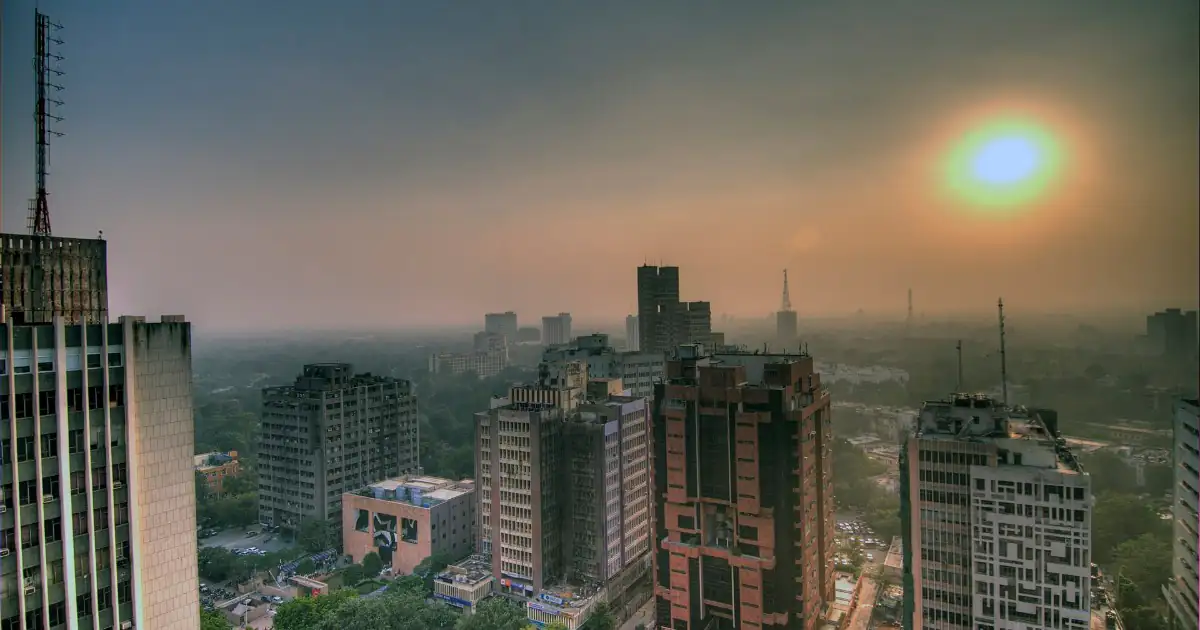
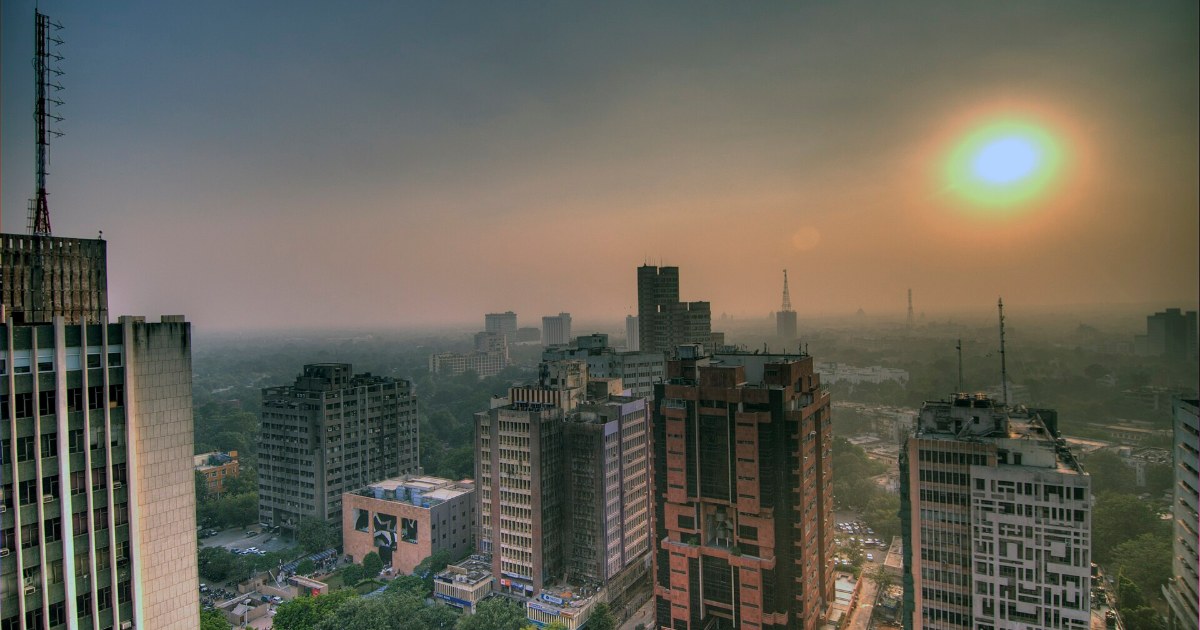
Public-health experts argue India should fight air pollution the way it fought COVID-19, in mission mode with dedicated funds. Under the National Clean Air Programme, 68% of spending went on road dust, while PM2.5, the finer particle most harmful to health, gets little. Read on!
1. What lessons from the COVID-19 response are being proposed for the National Clean Air Programme?
Air pollution caused losses equal to 1.36% of India's GDP in 2019, a Lancet Planetary Health study found. Yet it has never drawn the urgency of a health emergency.
Public-health experts argue that India's COVID-19 response offers lessons here. The core idea is that a health emergency was met with urgency, central coordination and measurable targets, and air pollution deserves the same.
For the National Clean Air Programme (NCAP), they call for mission-mode implementation, dedicated funding, measurable outcome indicators and annual milestones.
2. What is the National Clean Air Programme?
NCAP was launched in 2019 with the Ministry of Environment, Forest and Climate Change (MoEFCC) as the nodal ministry. It covers 131 cities.
Each city prepares a city action plan listing measures against its main sources of pollution, such as road dust, vehicles and waste burning.
NCAP is an executive programme. It was not created by an Act of Parliament, so its targets carry no statutory force. That is one reason the call for mission-mode delivery keeps coming back.
3. What targets did NCAP set?
The original goal was to cut PM10 levels by 20% to 30% by 2024-25, measured against a 2017-18 baseline.
The target was later revised. Cities were asked to achieve a reduction of up to 40% in PM10, or to meet the national standard of 60 micrograms per cubic metre, by 2025-26.
Both targets are framed in terms of PM10, the coarser particle. That choice shapes where the money goes.
4. Where has NCAP's money gone?
An assessment by the Centre for Research on Energy and Clean Air (CREA) in January 2026 tracked the funds:
Programme launched: 2019
Cities covered: 131
Funds released (NCAP and associated Finance Commission funding): Rs 13,415 crore
Share utilised: about 74%
Spent on road-dust management: 68%
Spent on transport: 14%
Spent on waste management and biomass burning: 12%
Industry and domestic fuel: under 1% each
Original PM10 target: 20% to 30% cut by 2024-25 (2017-18 baseline)
Revised target: up to 40% cut, or 60 micrograms per cubic metre, by 2025-26
India's annual PM2.5 standard: 40 micrograms per cubic metre
WHO annual PM2.5 guideline: 5 micrograms per cubic metre
Economic loss from air pollution (2019): 1.36% of GDP
Two-thirds of the spending on one source, road dust, is the striking number here.
Note: The Rs 13,415 crore figure is CREA's January 2026 count and includes associated Finance Commission funding. Older Government figures on NCAP funds use a different date and base, so the two should not be compared directly.
5. Why does the PM10 and PM2.5 difference matter?
PM10 and PM2.5 are particles 10 and 2.5 micrometres across or smaller. The finer the particle, the deeper it travels into the lungs and bloodstream.
Road-dust control mainly reduces PM10. But PM2.5 and ultrafine particles are the bigger threat to health, and much of it comes from burning fuel, in industry and in homes.
With industry and domestic fuel getting under 1% each, the most harmful pollutants are the least funded. India's own annual PM2.5 standard, at 40 micrograms per cubic metre, is already eight times the WHO guideline of five.
6. Is the Graded Response Action Plan enough?
The Graded Response Action Plan (GRAP) is an emergency tool for Delhi-NCR. It triggers stricter curbs as air quality worsens, such as limits on construction and certain vehicles.
GRAP acts on severe episodes. It is not a substitute for year-round cuts in emissions, which is what NCAP is meant to deliver. A city that relies on emergency curbs every winter has not solved its pollution problem.
7. What are the two sides of a mission-mode approach?
The case for mission mode
COVID-19 showed that dedicated funds, one chain of command and daily tracking can move a vast system quickly. Annual milestones and health-based indicators would make NCAP's progress visible and its failures harder to ignore.
The case for the current design
Pollution sources differ by city. City action plans allow local choices, and road dust is a real and visible source in many places. A rigid national mission could ignore those differences.
The gap no plan has closed
Neither approach works if spending keeps chasing the easiest particle to control rather than the most harmful one.
Until NCAP's targets and money move towards PM2.5 and its fuel-burning sources, a city can meet its PM10 target while its residents keep breathing the pollutant that harms them most. That is the limit no amount of road sweeping can fix.