What is the Amaravati Outer Ring Road? What changes with two packages instead of four?
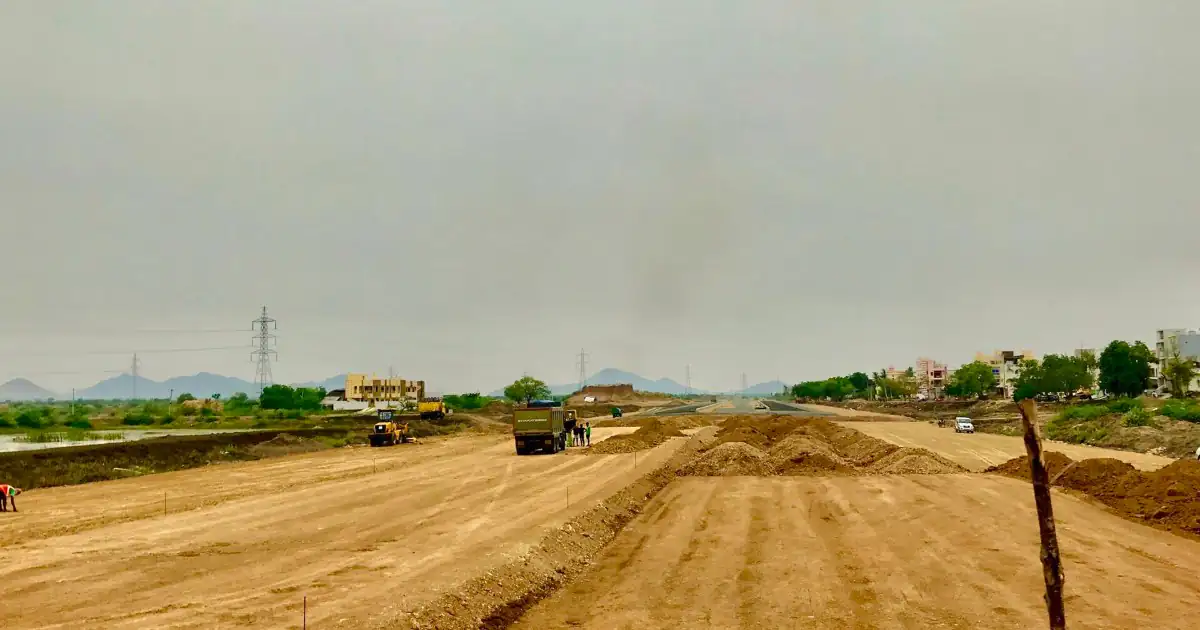
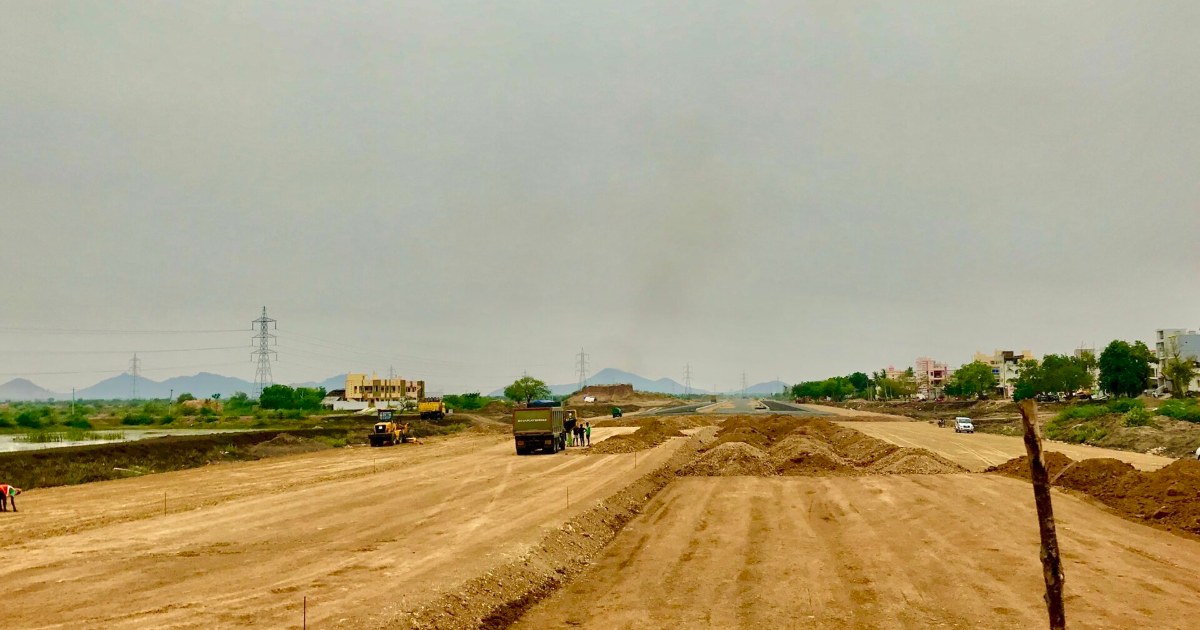
NHAI has re-tendered the 195.13 km Amaravati Outer Ring Road as two packages worth Rs 15,116.45 crore on BOT toll, a model in which the builder funds the road and recovers its cost from tolls. Bids are open till 15 January. Read on!
1. How has NHAI re-tendered the Amaravati Outer Ring Road?
Whoever builds the Amaravati Outer Ring Road will have to fund it and earn the money back from tolls.
The National Highways Authority of India (NHAI) has re-tendered the Amaravati Outer Ring Road (ORR) in two packages instead of the earlier four. Both packages are on the Build-Operate-Transfer (BOT) toll model.
The first package covers 87.63 km at Rs 7,873.40 crore. The second covers 107.5 km at Rs 7,243.05 crore. Together, the two packages cover 195.13 km and are worth Rs 15,116.45 crore.
Bids will be accepted till 15 January. The bid deadline in the earlier tender, 18 November, had been extended before the re-tender.
2. What is the Amaravati Outer Ring Road?
An outer ring road circles a city at a distance, letting long-distance traffic bypass the urban core and opening land along its route for development.
The Amaravati ORR is planned around the Andhra Pradesh capital region. Its main ring is 189.93 km long, and a 5.2 km spur takes the project to 195.13 km.
Note: The 195.13 km total includes the 5.2 km spur. The ring itself is 189.93 km, so the two lengths describe different things.
For a capital city still being built, the ring road is meant to come first, so that traffic and growth have a defined path rather than spilling along existing highways.
3. How does a BOT (Toll) concession work?
Under BOT (Toll), a private company, called the concessionaire, designs, builds, operates and maintains the highway for a fixed concession period.
In return, it is entitled to collect and keep the toll revenue during that period. The authority, not the concessionaire, sets the toll rates. At the end of the concession, the road passes back to the authority.
The defining feature is risk. The concessionaire raises the money and recovers it only from tolls, so it bears the traffic risk. If fewer vehicles use the road than forecast, the shortfall is its loss.
4. How is this different from the hybrid annuity model?
Under the hybrid annuity model (HAM), the Government pays 40% of the project cost as construction support while the road is being built. It pays the remaining 60% as annuity payments, with interest, over the operations period.
So under HAM the Government carries the traffic risk and the developer earns fixed payments. Under BOT (Toll), the developer carries the traffic risk and the Government saves its own capital.
The key figures of the re-tender:
Packages: 2, down from 4
Model: BOT (Toll)
Package 1: 87.63 km, Rs 7,873.40 crore
Package 2: 107.5 km, Rs 7,243.05 crore
Total: 195.13 km, Rs 15,116.45 crore
Main ring and spur: 189.93 km plus 5.2 km
Earlier four packages: 27.93 km, 56 km, 55.7 km and 55.5 km
Bid deadline: 15 January
HAM payment split: 40% construction support, 60% annuity
5. What changes with two packages instead of four?
Each package is now much larger, at around Rs 7,000 to 8,000 crore. Larger packages need bidders with stronger balance sheets, since under BOT they must fund construction themselves before any toll comes in.
Fewer packages also mean fewer handover points between contractors. A long stretch under one concessionaire can be built and maintained to one standard, and its toll income draws on traffic along a longer section of the ring.
The trade-off is competition. Fewer firms can bid for a Rs 7,000 crore toll project than for a smaller contract, so the tender's outcome will depend on how many serious bidders come forward by 15 January.
6. What are the two sides of a toll-based ring road?
The case for BOT (Toll)
The Government does not have to find Rs 15,116.45 crore upfront. The private developer funds the road, and users who benefit from it pay through tolls. The developer also has every reason to build well and maintain the road, since its income depends on traffic.
The case for caution
A toll road works only if traffic arrives. Around a capital region that is still developing, early traffic may be thin. Developers who doubt the forecasts may bid cautiously, demand a longer concession or stay away.
The question the tender cannot settle
The re-tender sets the terms. It cannot guarantee the traffic on which those terms depend. Whether the ring road succeeds as a BOT project rests on how fast the capital region around it fills up.
That makes the ring road a test of the capital project as a whole. Strong bids would signal private confidence in Amaravati's growth; weak ones could push the risk, and the cost, back towards the public purse.