What does India's fly ash rule require? Why is Yadadri's ash reaching a Krishna stream?
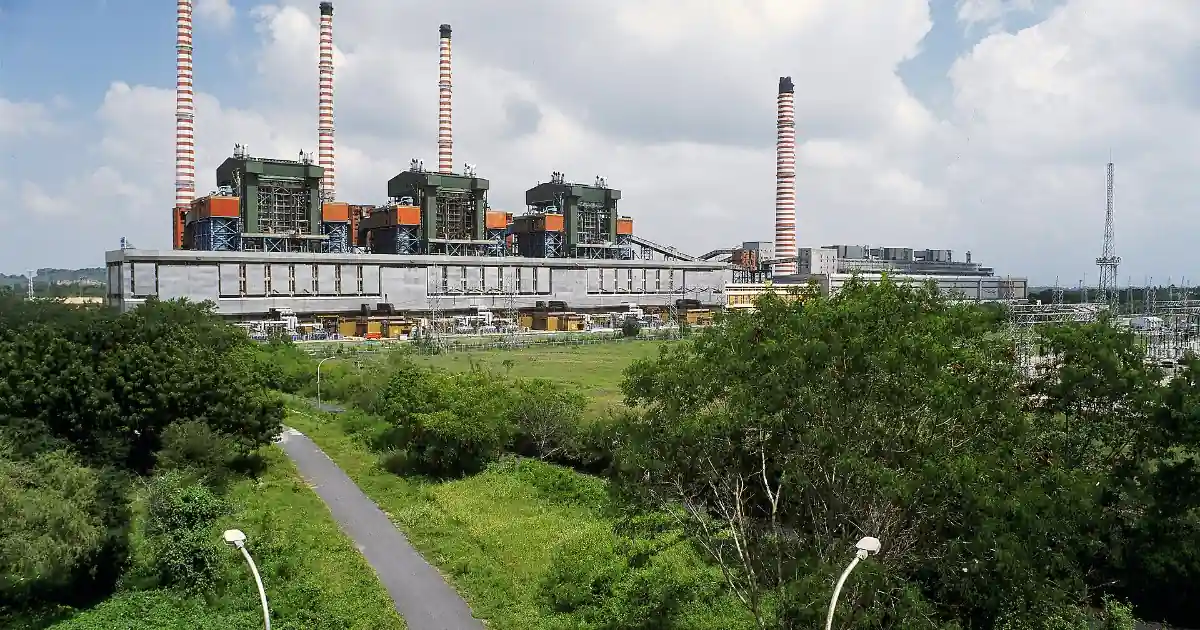
Ash-laden water from Telangana's 4,000 MW Yadadri thermal power plant is reported to be polluting the Thungapahad stream, which flows into the Krishna. Fly ash, the fine powder left after burning coal, must by law be fully put to use, not dumped. Here is what the rule requires and why the plant is struggling.
1. What has gone wrong at the Yadadri thermal plant?
A new power plant's ash is reaching a river. The Yadadri Thermal Power Station in Nalgonda district is reported to be discharging ash-laden water into the Thungapahad stream, a tributary that joins the Krishna.
The regulator found the fault. After a complaint in May 2026, the Telangana Pollution Control Board issued a show-cause notice to the plant's owner, TG Genco, the following month.
The inspection was blunt. It found the Ash Water Recovery System not working and discharging into the stream, and no effluent or sewage treatment plant on the premises.
People nearby report symptoms. The medical officer at the Damarcherla primary health centre sees at least four to five cases of allergic bronchitis, asthma and lung infections a day.
2. What is fly ash, and why is it a problem?
Fly ash is what coal leaves behind. When a power plant burns coal, a fine powder of unburnt mineral matter rises with the flue gas and is captured. Indian coal is high in ash, so plants produce it in huge volumes.
Dumped, it pollutes. Ash is usually mixed with water and sent to ponds. If those systems fail, the slurry reaches streams and fields, and dry ash blows into the air people breathe.
Used, it is a resource. Fly ash goes into cement, bricks and road embankments. That is why the law asks plants to use it rather than store it.
3. What does the fly ash notification require?
The rule is a central notification under environmental law. Its main features:
Notification: S.O. 5481(E), 31 December 2021, Environment Ministry
Legal basis: Section 3 of the Environment (Protection) Act, 1986, which empowers the Centre to take measures to protect the environment
Replaced: the Fly Ash Notification S.O. 763(E) of 14 September 1999
Core duty: thermal plants must achieve 100% utilisation of the ash they generate, in an eco-friendly manner
Cycle: 100% of each year's ash to be used within a three-year cycle, never falling below 80%, as reported
Principle: polluter pays, with penalties for shortfalls
Amended: 30 December 2022 and 1 January 2024
Note: fly ash rules are not new. They date back to the 1999 notification, and a policy researcher calls the 100% requirement more than 25 years old. The 2021 notification replaced it with a stricter framework.
4. How did the plant get here?
Its clearance has a contested history. After the plant's 2017 environmental clearance, the NGO Conservation Action Trust went to the National Green Tribunal, citing the plant's closeness to the Amrabad Tiger Reserve and its coal linkages.
The tribunal sent it back. In 2022 the NGT suspended the clearance and directed TG Genco to seek a fresh appraisal from the expert appraisal committee. A second public hearing followed in November 2023.
Then the plant moved fast. Fresh clearance came in April 2024 and the first unit began in January 2025. Four of five units are commissioned, and the project cost has risen to Rs 36,000 crore.
5. How large is the ash problem?
The arithmetic is daunting. A 4,000 MW plant running at 85% plant load factor (PLF), the share of full capacity actually used, on coal of 3,000 kcal/kg could produce about 21,000 tonnes of fly ash a day, over 75 lakh tonnes a year.
Buyers cannot absorb that. Fourteen cement companies have stated demand of 12,230 tonnes a day, about 45 lakh tonnes a year.
Actual output is lower, and disputed. Central Electricity Authority data shows an average PLF of 35.62% between 1 April and 17 November 2026, against TG Genco's claim of 50%. Lower running means less ash, but also a plant earning less from its investment.
6. What are the two sides?
The case for the plant
Telangana needs firm power, and a plant this size cannot be built without generating ash. Cement demand already covers a large share of what a fully running plant would produce, and demand can grow.
The case for the stream
The rule is not "use what you can"; it is use all of it. A recovery system that does not work and no treatment plant on site are failures of basic compliance, and the stream and the people downstream bear the cost.
Where enforcement stalls
A show-cause notice is a warning, not a fix. The real question is whether the Pollution Control Board will follow it with penalties or closure orders against a State-owned generator, and whether the 100% rule means anything if no buyer exists for the surplus.