What is the Global Stocktake? What will the second one decide by 2028?
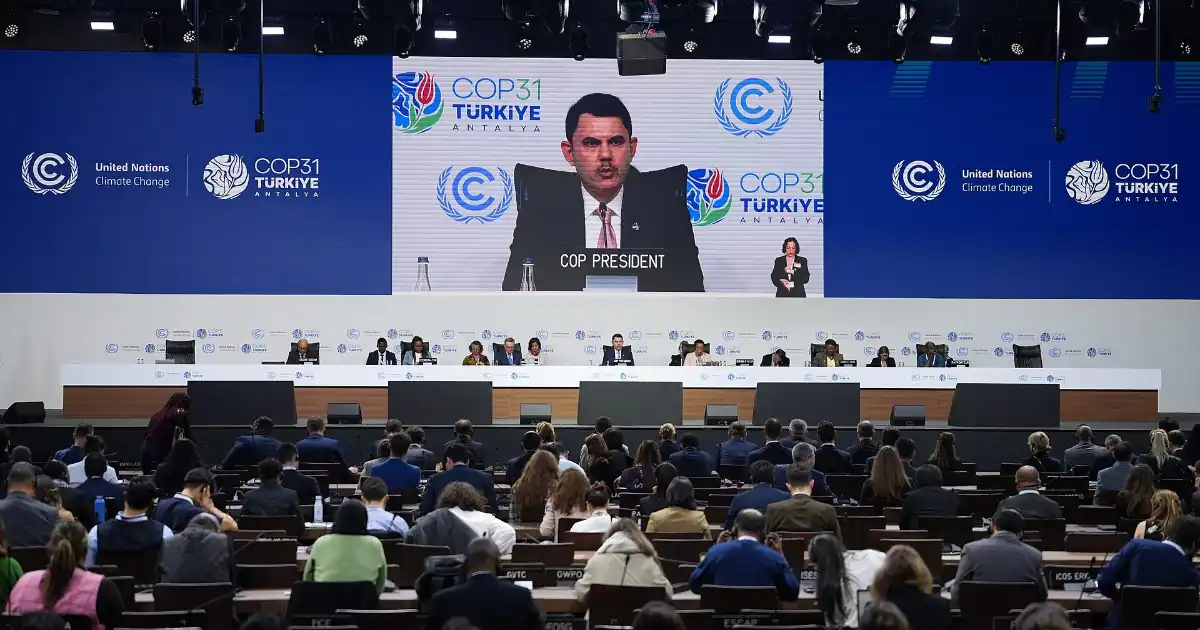
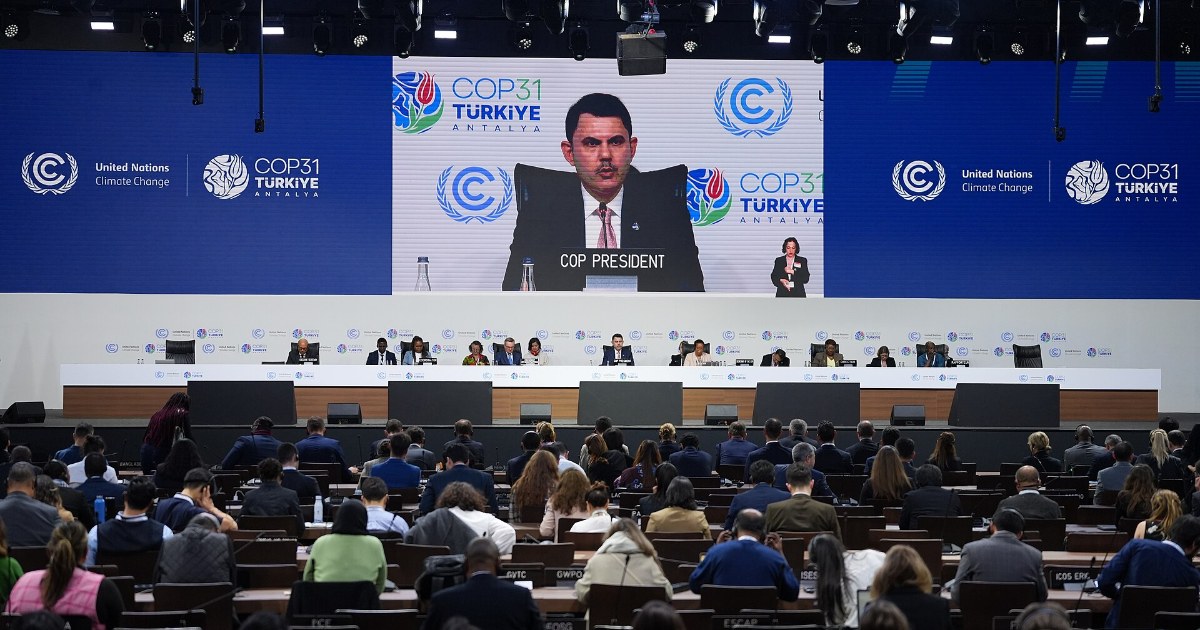
The second Global Stocktake, the Paris Agreement's five-yearly check on climate progress, was launched at COP31 in Antalya. It runs to 2028 and will judge whether national pledges can still keep 1.5C within reach. Here is how it works and where countries disagree.
1. What was launched at COP31 in Antalya?
A climate check-up begins. On November 18, 2026, a ministerial high-level event at COP31 in Antalya formally launched the second Global Stocktake. It was a COP31 Presidency event and produced no formal negotiated output.
Who spoke. UNFCCC chief Simon Stiell, COP31 President Murat Kurum and COP31 President of Negotiations Chris Bowen gave opening remarks. IPCC Chair Jim Skea presented the science.
Why it matters. This is the last stocktake before 2030. Its findings will shape the next round of national climate pledges.
2. What is the Global Stocktake?
A collective review. The Global Stocktake, or GST, is the Paris Agreement's five-yearly assessment of how far the world has come towards the Agreement's goals. It looks at all countries together, not at any one country's record.
Its purpose. The outcome is meant to inform Parties as they update and enhance their actions and support, in a nationally determined manner. It also feeds into international cooperation on climate.
Nationally determined, explained. Under Paris, each country sets its own target, called a Nationally Determined Contribution. The stocktake cannot impose targets. It can only show whether the sum of them is enough.
Note: GST here means Global Stocktake. It has nothing to do with the Goods and Services Tax, though the abbreviation is identical.
3. How will the second stocktake run?
Three components. The second stocktake follows a set sequence over two years:
Information collection and preparation: submissions due by 28 February 2027
Technical assessment: begins at SB 66, the subsidiary bodies' session, in June 2027
Consideration of outputs: the political phase, ending in a decision
The timeline. GST2 starts at CMA 8 in November 2026 and concludes at CMA 10 in November 2028. It covers the period 2024 to 2028.
What CMA means. CMA is the meeting of the Parties to the Paris Agreement, held alongside each COP. CMA 8 sits alongside COP31.
4. What is the legal basis for the stocktake?
Treaty first. The stocktake is mandated by Article 14 of the Paris Agreement. The detail comes from decisions taken by the Parties at successive meetings.
Mandate: Paris Agreement, Article 14
Modalities: Decision 19/CMA.1
Outcome of the first stocktake: Decision 1/CMA.5, adopted in 2023
Procedural and logistical elements of GST2: Decision 3/CMA.7
GST2 period: CMA 8 (2026) to CMA 10 (2028)
Why decisions matter. Article 14 sets the duty. The decisions fix how the work is organised, who submits what, and when each phase closes.
5. Where does the world stand on 1.5C?
Off track, by broad agreement. Parties broadly acknowledge that the world is not on course to limit warming to 1.5C. The question at Antalya is less whether the goal is slipping than how to respond.
The overshoot debate. Developed countries want any overshoot of 1.5C to be "short, shallow and reversible". Overshoot means temperatures rising above the limit for a time before being brought back down.
Adaptation is catching up. By the latest count, 83 developing countries have submitted National Adaptation Plans, which set out how they will cope with climate impacts already under way.
6. What are the two sides?
What developed countries want
Ambition and speed. Developed countries, joined by the least developed countries, want the IPCC's Seventh Assessment Report ready before the next COP, so that the stocktake works from the freshest science.
What developing countries want
Fairness and money. Developing countries want grant-based finance, technology transfer and equity at the centre of the review. Major developing economies, including India and China, resist compressed deadlines for the IPCC report.
The gap neither side has closed
The cost of capital. Borrowing for climate action costs poorer countries roughly 6 to 12 per cent, against 3 to 5 per cent for richer ones. A stocktake that measures ambition without measuring that cost will keep producing pledges that cannot be financed.
7. What happens next?
The calendar ahead. Submissions close in February 2027, and the technical assessment opens in June 2027. The political conclusion comes at CMA 10 in 2028.
What the stocktake cannot do. It can tell the world how far short it is falling, but it cannot make any country do more.
Visibility, not enforcement. Its force lies in what it makes visible. Whether that visibility translates into stronger pledges depends on finance, which the stocktake can measure but not supply.